Frank Lloyd Wright's Taliesin West still feels startlingly current because its stone, light, and geometry seem inseparable from the Arizona desert.
Matheus Rudo · 2026-06-18
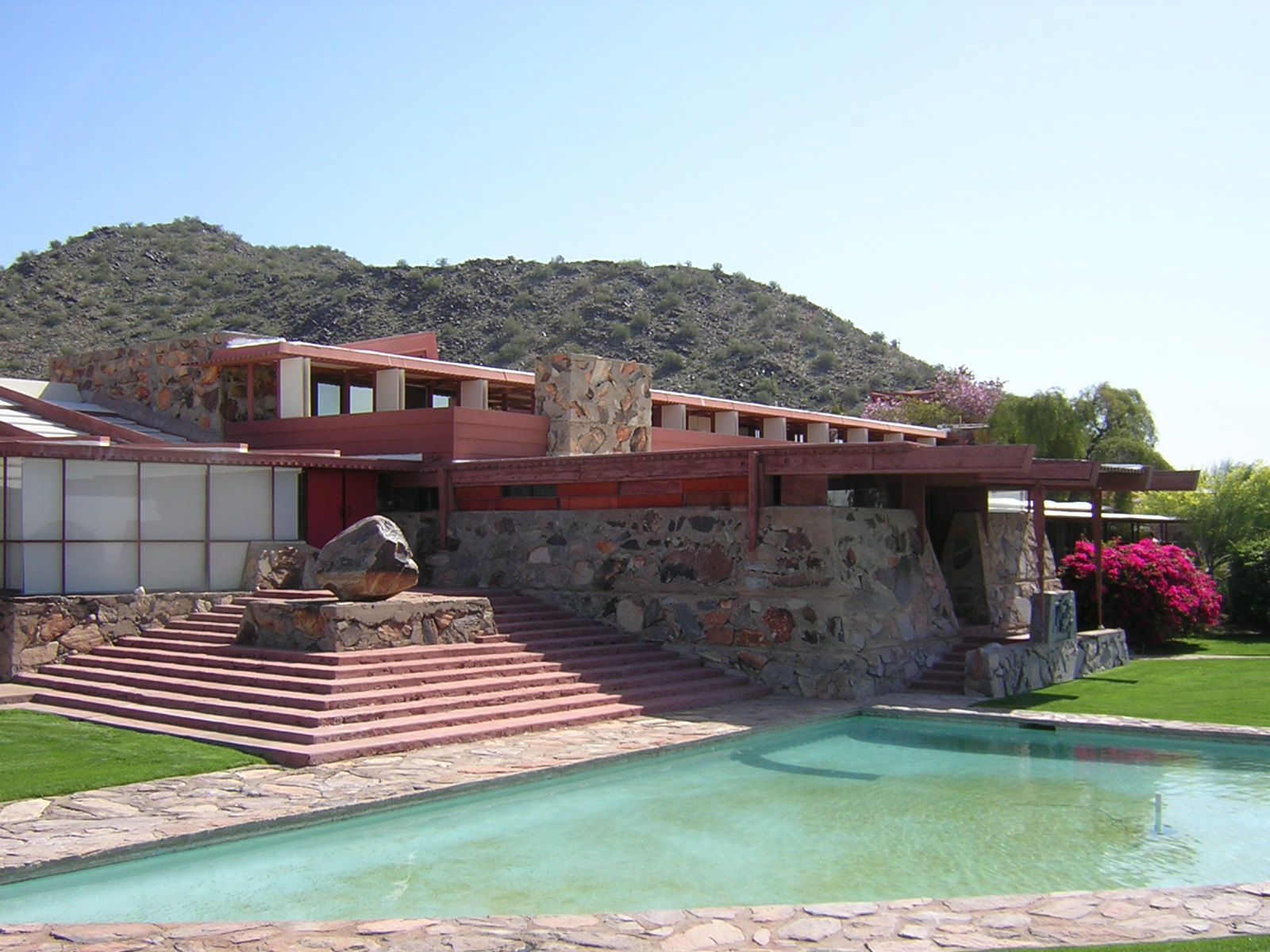
Why Taliesin West Still Feels Like It Grew Out of the Desert
Every April, Architecture Week puts public attention back on buildings that still have something to teach. Frank Lloyd Wright's Taliesin West belongs on that list. Set in Scottsdale at the foot of the McDowell Mountains, it was Wright's winter home, studio, and working laboratory, and it remains one of the clearest lessons in how architecture can feel rooted to a landscape without disappearing into it.
Why Wright Went to the Desert
According to the Frank Lloyd Wright Foundation, Taliesin West was established in 1937 after Wright acquired land in what was then rural northeast Scottsdale. Taliesin Preservation notes that the site took shape in 1938 as Wright, his family, and about thirty apprentices began turning the mesa into a winter camp, studio, and architectural lab.
That sequence matters. Taliesin West was not conceived as a polished retreat dropped onto a finished site. It grew from a working camp in the Sonoran Desert, and that origin still explains its character.
The Materials Were the Message
Wright built much of Taliesin West with what the foundation describes as "desert masonry": local rock set in wooden forms and bound with a mixture of cement and desert sand. The complex also used canvas roofs to soften the Arizona sun and redwood beams to bring warm accents against stone and sky.
Those choices did more than solve climate. They made the buildings look assembled from the desert's own colors and textures. Instead of treating the landscape as scenery, Wright turned it into an active design partner.
A Campus for Work, Experiment, and Living
Taliesin West was never just a house. Over time it expanded to include a drafting studio, dining spaces, theaters, terraces, pools, gardens, Wright's office and private quarters, and residences for apprentices and staff, all linked by walkways and open-air transitions. That mix of life and work helps explain why the place still feels alive rather than preserved behind glass.
The UNESCO World Heritage Centre includes Taliesin West within The 20th-Century Architecture of Frank Lloyd Wright, a 2019 inscription recognizing eight Wright sites that demonstrate the reach of his organic architecture. At Taliesin West, that idea is easy to read: blurred boundaries between inside and outside, strong geometric order, and a direct response to the desert setting.
Why It Still Feels Contemporary
Taliesin West does not feel contemporary because it predicted a trend. It feels contemporary because many current design conversations are already inside it: local materials, climate response, indoor-outdoor living, hands-on making, and architecture shaped by place instead of copied from somewhere else.
The site is also still active. The Frank Lloyd Wright Foundation continues to run tours and public programs there, while AIA Architecture Week 2026 keeps attention on architecture as a public conversation rather than a specialist hobby. Taliesin West fits that moment perfectly because it is both a historic landmark and a living design lesson.
What Designers Can Still Learn From Taliesin West
1. Site is not a backdrop
The desert is not decoration here. The building's geometry, color, and material logic all begin with the landscape.
2. Rough materials can feel precise
Stone, sand, canvas, and redwood sound informal, yet Wright used them to create spaces that feel exact and intentional.
3. Atmosphere is part of the architecture
Taliesin West shows how light, shadow, texture, and movement can shape memory as strongly as walls and plans.
FAQ
Is Taliesin West a UNESCO site?
Yes. It is one of the eight properties included in UNESCO's The 20th-Century Architecture of Frank Lloyd Wright, inscribed in 2019.
Was Taliesin West Frank Lloyd Wright's home?
Yes. It served as Wright's winter home, studio, and desert laboratory in Scottsdale, Arizona.
Can you visit Taliesin West today?
Yes. The Frank Lloyd Wright Foundation currently operates tours and public programs at the site.
Final Thought
Taliesin West still matters because it shows organic architecture in working form. Wright did not make a desert-themed building. He made a place whose materials, light, and geometry feel inseparable from the desert itself, and that is why it continues to look less like a monument and more like a living idea.