Gropius House still feels fresh because it did not import Bauhaus as a rigid style. It translated modernism through wood, brick, fieldstone, and the habits of a New England home.
Matheus Rudo Oliveira · 2026-11-02
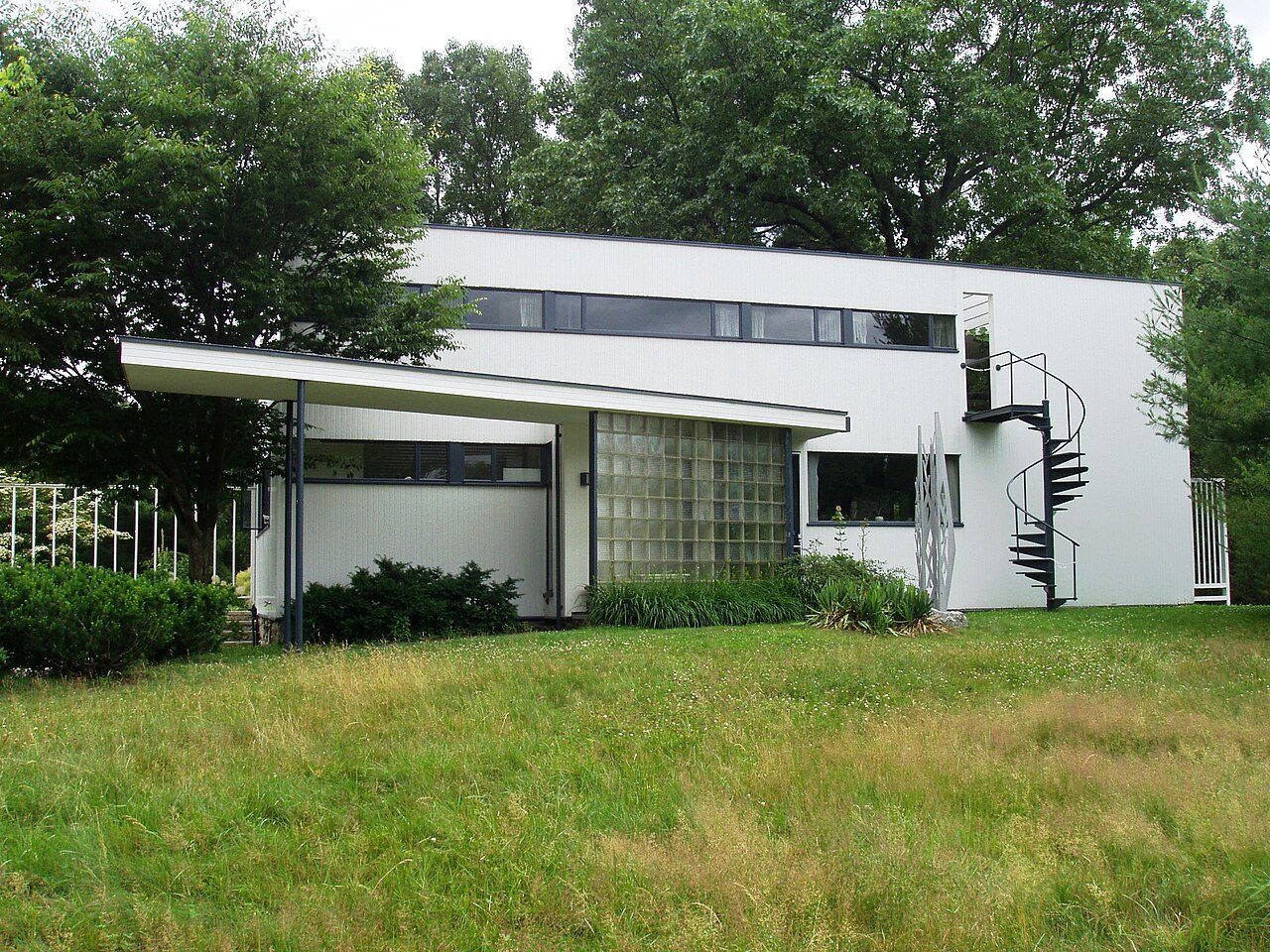
Walter Gropius's house in Lincoln, Massachusetts is one of the clearest reminders that Bauhaus was never supposed to be a rigid look shipped unchanged from one country to another. The house feels fresh because it is translated, not copied. Gropius brought modern ideas with him to New England, but he did not pretend the landscape, climate, and local building habits were irrelevant. That is why the house combines ribbon windows, glass block, and modern planning with wood cladding, brick, and fieldstone. It is a better argument for Bauhaus than a more doctrinaire export would have been.
The most interesting facts around the house reinforce that sense of adaptation. Historic New England documents the role of local builder Casper J. Jenney and principal carpenter Jack Studley, which matters because the house was never just a theoretical statement. It had to be made well in a specific place. Even the completion date has an almost unbelievable sharpness to it: September 21, 1938, the day of the Great Hurricane of 1938. That detail stays with people because it sounds symbolic without needing to be exaggerated. The house arrived in America at the exact moment weather could have made the promise of international modernism feel flimsy, and instead the project became one of its most durable domestic demonstrations.
If you are wondering why Gropius House matters, the answer is not simply that Walter Gropius founded the Bauhaus in 1919. It is that this house shows what happened when those ideas met everyday American life and became warmer, more local, and more persuasive. It is modern without becoming abstracted away from living, which is why it still feels less like a relic than a correction.
Wikimedia Commons (ver arquivo original).