Villa Mairea still feels fresh because Aino and Alvar Aalto turned modernism into something softer, warmer, and more connected to daily life.
Matheus Rudo Oliveira · 2026-11-02
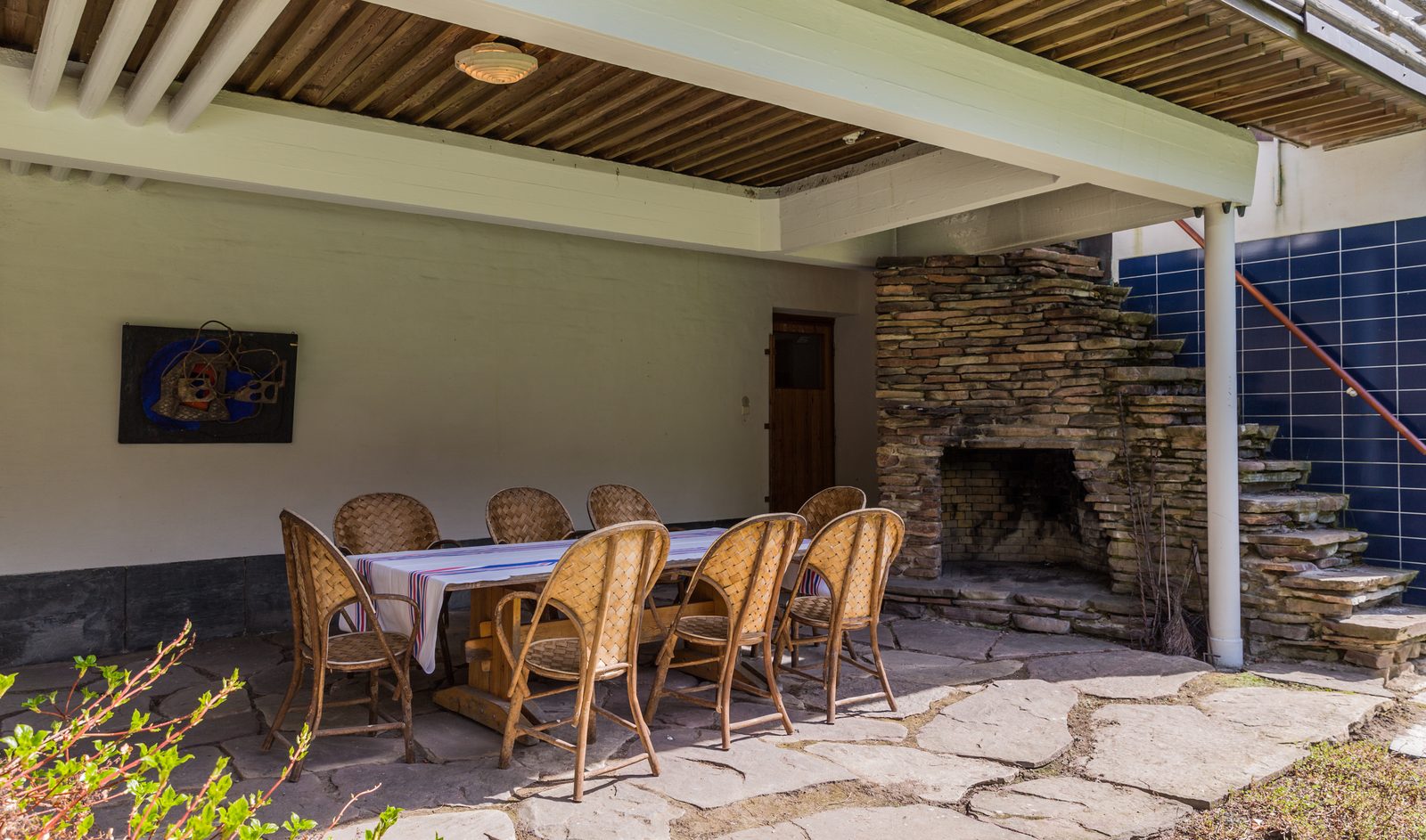
If modernism sometimes feels too cold in photographs, Villa Mairea is the building that corrects that impression. Completed in 1939 in Noormarkku, Finland, the house was designed by Aino and Alvar Aalto for Maire and Harry Gullichsen. Official Villa Mairea and Alvar Aalto Foundation sources describe it as one of the most significant private homes of the modernist era and one of Aalto's best works. That reputation makes sense the moment you look past the headline image. Villa Mairea is not memorable because it is strict. It is memorable because it makes modernism feel inhabited.
That is also why it has a timely hook right now. As of July 12, 2026, Villa Mairea is publicly promoting its summer tours, and the Alvar Aalto Foundation says the wider Aalto Works nomination, which includes Villa Mairea, will be decided by the UNESCO World Heritage Committee in Busan, South Korea, from July 19 to July 29, 2026. For an evergreen architecture post, that is strong overlap between search intent, travel curiosity, and a real current event.
Why Villa Mairea matters beyond the usual Aalto praise
The official Villa Mairea site says the house was designed as a home for the Aaltos' friends Maire and Harry Gullichsen and completed in August 1939 in the Ahlstrom Estate area. The Visit Alvar Aalto entry adds useful context: the Gullichsens were progressive patrons of the arts, and those circumstances gave Aino and Alvar Aalto unusual freedom to experiment.
That freedom matters because Villa Mairea is not just another wealthy modern house. It is where the Aaltos tested how rational planning, natural materials, art, landscape, and domestic ritual could belong to the same idea. The result is a building that still feels more emotionally intelligent than many later houses that are technically cleaner.
Why the entrance feels more like a forest than a facade
One of the clearest details comes from the Alvar Aalto Foundation's architecture page. It notes that the main entrance has a colonnade of unstripped saplings supporting a free-form roof. That sounds like a small detail, but it changes the whole reading of the house. Instead of announcing modernity through a hard abstract gesture, Villa Mairea lets you arrive through something that feels halfway between architecture and woodland.
This is the real lesson of the building. Aalto did not reject modernism. He loosened it. The materials on the elevations, according to the same source, combine teak, Finnish pine, thin stone slabs, and rough-cast rendering. Even before you enter, the house resists the idea that modern architecture has to look clinically uniform.
Why Villa Mairea feels carefully composed without feeling rigid
The plan is disciplined, but the experience is not mechanical. The Alvar Aalto Foundation notes that a few steps lead from the entrance hall to the living room, and that the staircase is bordered by irregularly composed wooden poles. Those poles are one of the building's most famous details because they do more than decorate a stair. They make structure, movement, and atmosphere blur together.
The same source also says that part of the exterior wall is movable on a sliding system so that "the house can be completely opened to the garden." That is a good reminder that Villa Mairea was not designed as a sealed object. It was built to move between indoors and outdoors, formality and relaxation, entertaining and retreat.
This is where Villa Mairea still outperforms many houses inspired by textbook modernism. The geometry is there, but it never becomes the whole story. The house keeps making room for texture, shadow, landscape, and small shifts in level that make the experience feel human rather than diagrammatic.
Why Aino Aalto deserves to stay visible in the story
Many readers know Villa Mairea as an Alvar Aalto masterpiece, but the official sources are clear that Aino Aalto was part of the design story. The Villa Mairea site and Visit Alvar Aalto both identify Aino and Alvar Aalto as the designers, and Visit Alvar Aalto specifically notes that the interior design was in the hands of Aino Aalto.
That matters because Villa Mairea is not powerful only as an exterior composition. It works because furniture, surfaces, circulation, and the scale of rooms support a lived atmosphere. The house is one of the clearest examples of the Aaltos' more holistic approach, where architecture and interior design are not treated as separate disciplines.
Why the house still feels current in 2026
Villa Mairea is not a ruin, a reconstruction, or a frozen icon. It is still a visitable work with an active public program. The official site says tours are offered throughout the year in Finnish and English, while the current summer notice says summer tours are on sale now. Visit Finland also confirms that the guided visit introduces the architecture, history, and art collections and takes about one hour.
That public accessibility gives the house real editorial value in July 2026. Readers are not only learning architectural history. They are also finding a place they can actually plan to visit. Add the UNESCO nomination timeline, and Villa Mairea becomes more than a canonical house. It becomes a useful answer to a common search question: which famous modernist buildings are still worth traveling for now?
What Villa Mairea teaches about humane modernism
The Alvar Aalto Foundation's UNESCO page describes Aalto's architecture as a humane approach centered on users, communities, and the relationship between people, buildings, and nature. Villa Mairea makes that abstract description easy to understand. You can see it in the sapling entrance, the mixed materials, the sliding wall to the garden, and the way the house turns circulation into an atmosphere instead of a corridor.
That is why Villa Mairea stays relevant. It shows that modern architecture does not become more powerful by removing every trace of softness. In this house, the modern idea survives precisely because it is allowed to bend toward art, timber, landscape, and everyday life.
FAQ
What is Villa Mairea?
Villa Mairea is a private house in Noormarkku, Finland, designed by Aino and Alvar Aalto for Maire and Harry Gullichsen and completed in 1939.
Why is Villa Mairea famous?
It is famous for showing a more humane version of modernism through natural materials, experimental planning, strong interior design, and a close relationship with the surrounding landscape.
Can you visit Villa Mairea in 2026?
Yes. As of July 12, 2026, the official Villa Mairea site says guided tours are organized throughout the year in Finnish and English, and it is currently promoting summer tours that are on sale now.
Is Villa Mairea part of a UNESCO listing?
Not yet. Villa Mairea is part of the Aalto Works series nominated for UNESCO World Heritage status, and the official decision is scheduled for the World Heritage Committee meeting on July 19-29, 2026.
Final thought: Villa Mairea still feels ahead of its time because the Aaltos understood that modernism would last longer if it felt less like a rulebook and more like life.
Sources Checked:
- https://villamairea.fi/en/
- https://www.alvaraalto.fi/en/architecture/villa-mairea/
- https://visit.alvaraalto.fi/en/destinations/villa-mairea/
- https://www.alvaraalto.fi/en/alvar-aalto-foundation/alvar-aalto-and-unesco-world-heritage/
- https://www.visitfinland.com/en/product/47d64d13-224d-42f0-abdf-caa43e83e275/guided-tour-in-villa-mairea/
- https://commons.wikimedia.org/wiki/File:Villa_Mairea%2C_Noormarkku%2C_Finland_%2826915873731%29.jpg
- https://commons.wikimedia.org/wiki/Special:FilePath/Villa_Mairea%2C_Noormarkku%2C_Finland_%2826915873731%29.jpg


Image Download Links:
- https://commons.wikimedia.org/wiki/File:Villa_Mairea%2C_Noormarkku%2C_Finland_%2826915873731%29.jpg
- https://commons.wikimedia.org/wiki/Special:FilePath/Villa_Mairea%2C_Noormarkku%2C_Finland_%2826915873731%29.jpg
- images/featured-image.jpg
Internal Link Suggestions:
- Link to the existing Rudo Studios post on Paimio Sanatorium with anchor text like
another Aalto project where architecture was designed around how people actually feel - Link to the existing Rudo Studios post on Maison La Roche with anchor text like
a very different modernist house where movement matters just as much as the facade
Wikimedia Commons (ver arquivo original).