Pasadena's Gamble House still feels unusually alive because Greene and Greene turned timber, joinery, and light into architecture you almost read by touch.
Matheus Rudo Oliveira · 2026-11-02
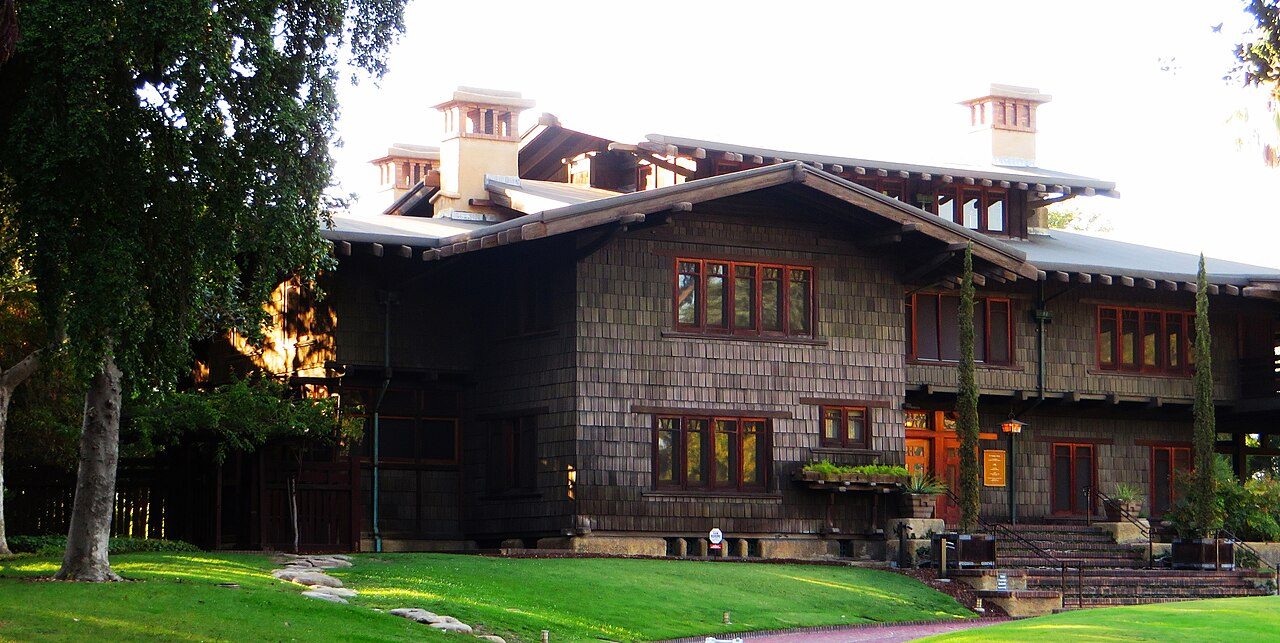
The Gamble House is one of those buildings that people think they know before they have really looked at it. It is the masterpiece bungalow, the Pasadena landmark, the Greene and Greene icon, the house from Back to the Future. None of that is wrong, but none of it quite explains the sensation of being there. What visitors remember is often tactile rather than stylistic. The wood does not simply line the rooms. It seems to round them, warm them, and slow down the way your eye moves. That is why the house can feel less like a historic object than an atmosphere made visible.
Its construction history helps explain the precision behind that softness. David and Mary Gamble commissioned the house in 1907, construction began in March 1908, and the 8,100-square-foot house was finished in January 1909. The official history also notes Swiss and Japanese influences, which is useful because the house never reads like a single-source revival. It is more composed than that. The details and joinery matter so much that the museum can justify a three-hour tour devoted largely to how the thing was made. That fact alone is a kind of architectural compliment. Very few houses can withstand close reading at the scale of hinges, pegs, and transitions.
This is why the Gamble House still feels modern in a deeper sense than many newer homes. Greene and Greene were obsessively precise, but the precision never hardens into coldness. If you are asking where the house is, who designed it, or why architecture readers keep returning to it, the answer is that it proves warmth is not the opposite of rigor. Material intelligence can be exact and generous at once, and the Gamble House remains one of the best demonstrations of that balance.
Wikimedia Commons (ver arquivo original).