The Stahl House is famous for one unforgettable image, but Pierre Koenig's real achievement was turning a difficult Los Angeles hillside into a precise machine for living with a view.
Matheus Rudo Oliveira · 2026-11-02
Stahl House: Why the Photograph Is Not the Whole Story
If you know the Stahl House, you probably know the picture first. Julius Shulman's 1960 photograph shows two women seated in a glass living room that seems to hover over Los Angeles at night. It is one of the most widely reproduced images in modern architecture, and it helped turn Pierre Koenig's Case Study House No. 22 into a global icon.
But the image only works because the architecture already does. The real lesson of the Stahl House is not that it photographs well. It is that Koenig designed a house so clear in plan, structure, and siting that one photograph could explain an entire way of living.
The House Began With the Site, Not the Style
According to the official Stahl House story, Buck and Carlotta Stahl bought the lot in 1954 on a handshake for $13,500. The site had the view they wanted, but it was also steep, difficult, and far from an easy place to build. The same page explains that the family spent weekends hauling leftover concrete up the hill to stabilize the ground before the house itself took shape.
That background matters because the Stahl House can look effortless in photographs. In reality, it was born from a stubborn confrontation with the land. The glamour came later. First came grading, retaining, and figuring out how a home could actually sit on that edge.
Why Pierre Koenig Was the Right Architect
The official Stahl House story says the Stahls found Pierre Koenig in late 1957 after two earlier attempts with other designers. Koenig was the architect willing to accept the drama of the site instead of softening it. He did not treat the cliff as a problem to hide. He turned it into the central fact of the design.
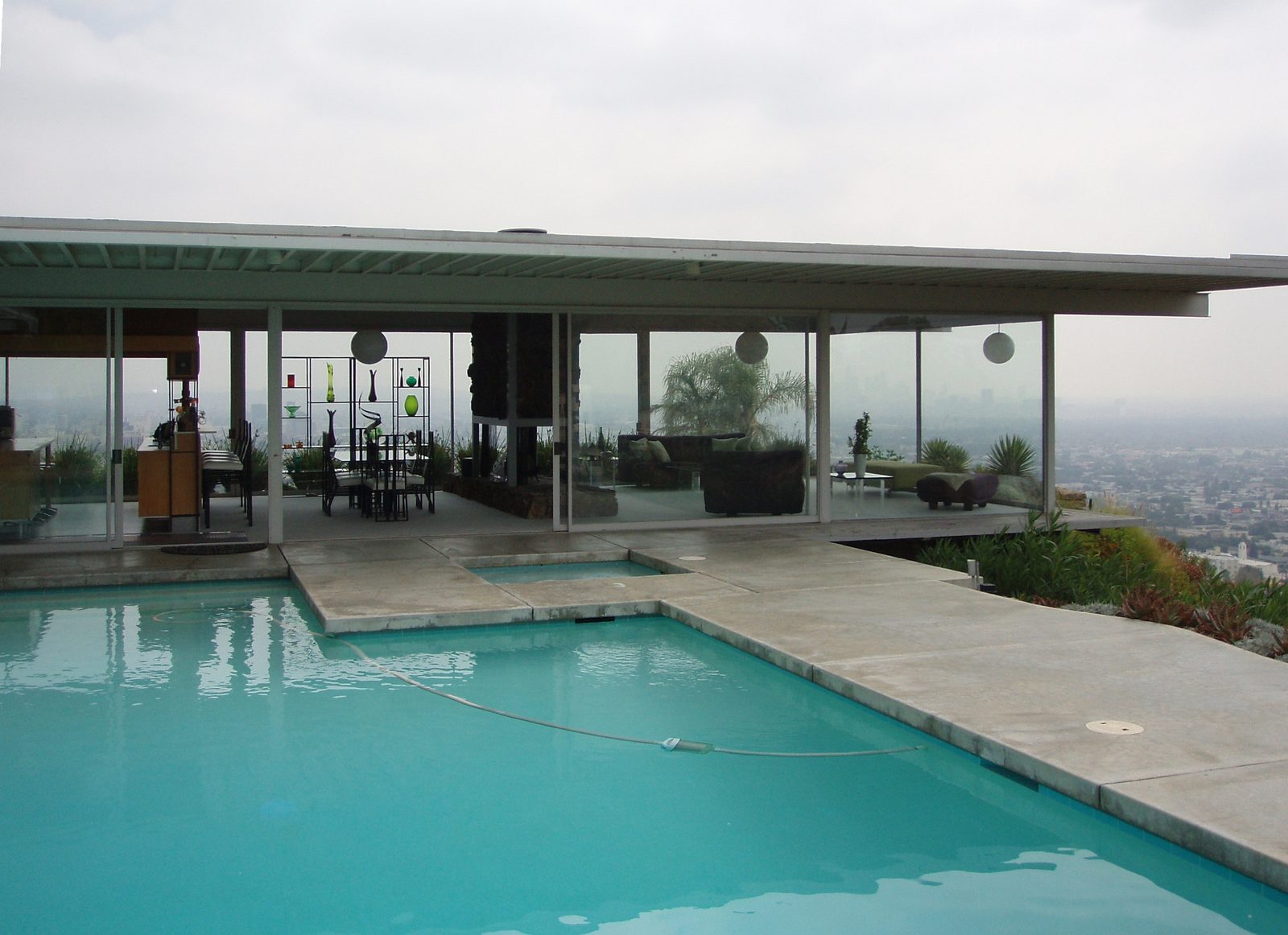
The National Register nomination for Case Study House No. 22 describes the house as an L-shaped composition made almost entirely of steel and glass, set on a concrete pad with a rectangular pool occupying the space inside the L. The same document notes that twenty-foot modules allowed for large expanses of glass facing the pool and the view.
That is the key move. The house is not famous because it is transparent. It is famous because Koenig knew exactly where to place the steel frame, the pool, and the edge so transparency would feel controlled rather than exposed.
The Photograph Is Great Because the Plan Is Great
Getty's Inside LA's Most Iconic Modernist Home, Case Study House #22 offers the cleanest explanation of the house's logic. In the episode transcript, Kim Cross explains that Buck Stahl wanted to stand in every room, turn his head, and see every view. That desire was not a decorative preference. It became the design brief.
Seen that way, the famous Shulman image is not a happy accident. It is evidence that the plan works. The living room feels suspended because Koenig made the house read as a light frame at the edge of a promontory. The pool anchors the composition. The glass removes visual weight. The roof projects confidence. The city becomes part of the interior experience without turning the house into a spectacle machine.
This is why the photograph endures. It captures an already disciplined arrangement of structure, horizon, and domestic life.
What the Stahl House Actually Teaches About Modernism
The house is often reduced to a mood board for mid-century Los Angeles: steel, glass, pool, lights, glamour. That misses the harder architectural intelligence underneath.
1. Minimalism is doing structural work here
Koenig's restraint is not aesthetic emptiness. It is precision. The house depends on a limited set of elements doing exactly what they need to do: frame, slab, roof, glass, pool, and view.
2. The edge condition is the whole project
The Stahl House is thrilling because it negotiates the boundary between safety and exposure so carefully. The house feels daring, but it is not careless. That tension is where the architecture lives.
3. The view was designed, not merely borrowed
Many houses have great views. Fewer know how to edit them. Koenig used geometry, glazing, and the L-shaped plan to turn a broad panorama into something legible from inside the home.
Why the House Still Feels Current in 2026
The official tour page shows that the house is still being shared with the public through prepaid visits with docents on site. That matters because the Stahl House is not just an image in the archive. It remains an active place people can experience.
It also still speaks directly to current conversations about architecture and media. We live in a time when buildings are constantly judged by the image before the plan. The Stahl House is a useful correction. It reminds us that a building becomes photogenic for deeper reasons: proportion, siting, discipline, and clarity.
FAQ
What is the Stahl House?
The Stahl House is Pierre Koenig's Case Study House No. 22, a steel-and-glass residence in the Hollywood Hills of Los Angeles created under the Arts & Architecture Case Study House Program.
When was the Stahl House built?
The National Register nomination states that the house was built between 1959 and 1960.
Why is the Stahl House so famous?
It is famous both for its architecture and for Julius Shulman's 1960 photograph, which became one of the most widely reproduced images of modern residential architecture.
Can you visit the Stahl House today?
Yes. As of Thursday, July 23, 2026, the official Stahl House site offers prepaid tours and notes that docents are on site to answer questions.
Final Thought
The Stahl House deserves its famous photograph, but it should not be trapped inside it. Pierre Koenig's real achievement was not producing a cinematic image of Los Angeles. It was designing a house precise enough that the image could never be separated from the architecture that made it possible.
Internal Link Suggestions
- Why Taliesin West Still Feels Like It Grew Out of the Desert
- Schindler House: Why Open Plan Living Started as a Social Experiment
- Eames House: Why It Still Feels More Like a Prototype Than a Home
Sources Checked
- https://stahlhouse.com/stahl-house-story/
- https://stahlhouse.com/pierre-koenig/
- https://stahlhouse.com/julius-shulman/
- https://stahlhouse.com/tours/
- https://www.getty.edu/podcasts/art-and-ideas/inside-la-most-iconic-modernist-home-case-study-house-22/
- https://www.getty.edu/research/collections/component/10VZW5
- https://npgallery.nps.gov/pdfhost/docs/NRHP/Text/13000519.pdf
- https://commons.wikimedia.org/wiki/File:Case_Study_House_No._22.JPG

Image Download Links
- https://commons.wikimedia.org/wiki/File:Case_Study_House_No._22.JPG
- https://commons.wikimedia.org/wiki/Special:FilePath/Case%20Study%20House%20No.%2022.JPG

Wikimedia Commons (ver arquivo original).