Alvar Aalto's Saynatsalo Town Hall still feels unusually warm for a civic building because it turns government into a courtyard, a stair, a library, and a daily public route.
Matheus Rudo Oliveira · 2026-11-02
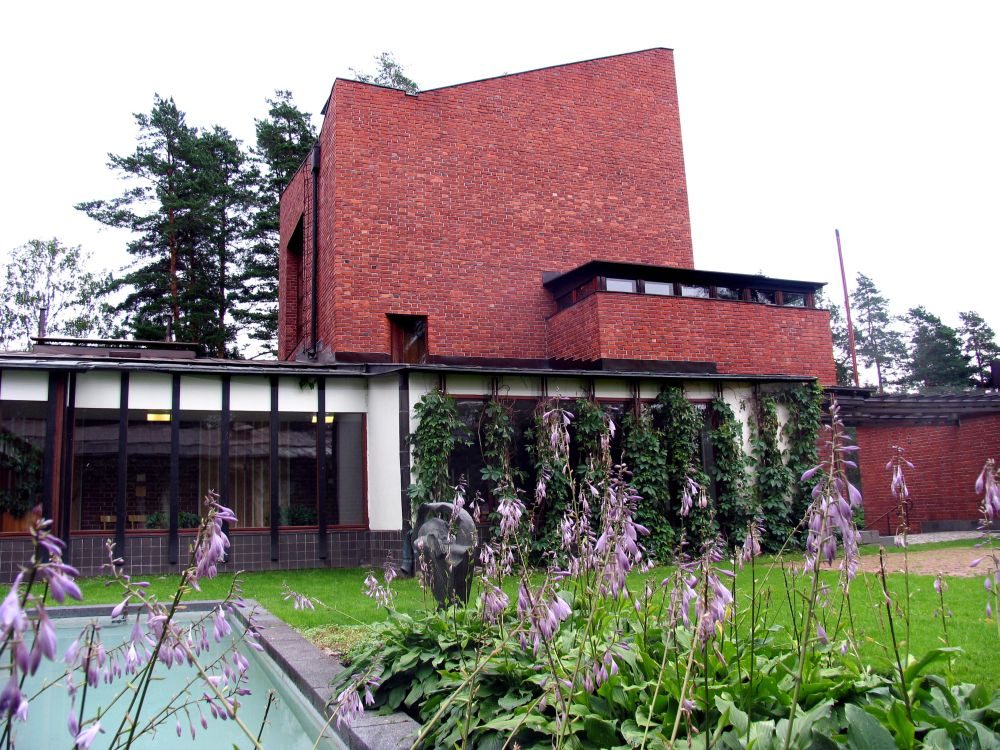
If many town halls feel remote, Saynatsalo Town Hall still feels surprisingly close to daily life. That is what makes Alvar Aalto's building so useful to revisit in 2026. As of July 16, 2026, Aalto2 is listing Summer 2026 tours for the building, and the site can also be visited independently during opening hours. There is also a current exhibition, Between Soft Borders, at the town hall through September 30, 2026. The live travel hook matters, but the bigger reason to care is evergreen: Aalto designed a civic building that makes politics feel local, physical, and human.
The official Alvar Aalto Foundation page says the invitational competition was held in 1949, Aalto won with an entry called Curia, and the building was completed in 1952. Instead of making one flat office block, he arranged the program as what the foundation calls a miniature hilltop city.
Why it feels more like a small town than an office block
According to the Alvar Aalto Foundation, Saynatsalo was designed for a small industrial community of about 3,000 inhabitants. The program mixed administrative offices, a municipal library, residential apartments, and shops. That mixture is the first reason the building still feels alive. Aalto did not isolate government from ordinary routines. He placed shops at street level, apartments in a quieter wing, and public services above, so the building worked as part of town life rather than as a sealed institution.
The Visit Alvar Aalto page adds that the complex is organized as four two-storey wings around a raised square courtyard. The library still serves the area, while former office spaces now function as galleries and exhibition areas. Some of the residential spaces are now used for accommodation. That ongoing mix of uses helps explain why the place feels inhabited instead of embalmed.
Why the courtyard changes the mood of civic power
One of Aalto's smartest moves was to raise the courtyard above its surroundings. The Alvar Aalto Foundation notes that public services were reached by a granite stairway leading up into the inner court. That small climb changes the psychology of arrival. You do not enter by passing through a grand facade and a security barrier. You move upward into a shared outdoor room first.
That sequence matters. It gives the building a sense of ceremony without making it authoritarian. The Aalto Works nomination page describes Saynatsalo as an architectural symbol of modern municipal democracy, with spaces and courtyards designed to encourage participation, interaction, and local democracy. That is the deeper reason the complex still feels generous: the architecture stages civic life as encounter, not intimidation.
Why brick does so much of the emotional work
The dominant material is bare red brick, used outside and in the representative interiors. The council chamber rises tower-like above the rest of the complex, but the brick keeps the building from feeling abstract or slick. Even when the composition becomes monumental, the surface remains tactile and slightly rough.
That is where Aalto separates himself from colder versions of modernism. The building is formally disciplined, yet its material language feels closer to touch, weather, and labor. The result is a town hall with dignity, but not distance.
Why this is a strong architecture story in 2026
Saynatsalo works especially well as a 2026 topic because it combines a major architect, a travel-ready site, and a civic question that still feels current. Aalto2's current tour pages show active visitor access this summer, and the Between Soft Borders exhibition keeps the building in public cultural use right now. But even if those listings disappeared tomorrow, the core lesson would remain: civic architecture becomes more memorable when it feels like part of everyday life rather than a monument set apart from it.
FAQ
What is Saynatsalo Town Hall?
Saynatsalo Town Hall is a civic complex in Jyvaskyla, Finland, designed by Alvar Aalto and completed in 1952.
Why is Saynatsalo Town Hall important?
It is one of Aalto's most admired works because it combines government offices, library spaces, housing, shops, and a raised courtyard in one carefully staged civic composition.
Can you visit Saynatsalo Town Hall in 2026?
Yes. As of July 16, 2026, Aalto2 lists Summer 2026 tours, and its visitor information says the building can also be explored independently during opening hours.
What makes the building feel human?
Its mixed uses, brick surfaces, raised courtyard, and gradual approach make public life feel shared and local instead of distant or bureaucratic.
Final thought: Saynatsalo Town Hall still matters because Aalto understood that democracy is easier to believe in when architecture gives it a human scale.
Sources Checked:
- https://www.alvaraalto.fi/en/architecture/saynatsalo-town-hall/
- https://visit.alvaraalto.fi/en/destinations/saynatsalo-town-hall/
- https://aalto2.museum/en/guided-tour-destinations/saynatsalo-town-hall/
- https://aalto2.museum/en/tuotteet/saynatsalo-town-hall/
- https://visit.alvaraalto.fi/en/news/photographer-emmi-minkkinens-between-soft-borders-exhibition-opens-at-saynatsalo-town-hall/
- https://www.alvaraalto.fi/en/alvar-aalto-foundation/alvar-aalto-and-unesco-world-heritage/aalto-works-sites/
- https://commons.wikimedia.org/wiki/File:S%C3%A4ynatsalo.jpg
- https://commons.wikimedia.org/wiki/Special:FilePath/S%C3%A4ynatsalo.jpg


Image Download Links:
- https://commons.wikimedia.org/wiki/File:S%C3%A4ynatsalo.jpg
- https://commons.wikimedia.org/wiki/Special:FilePath/S%C3%A4ynatsalo.jpg
- images/featured-image.jpg
Internal Link Suggestions:
- Link to the existing Rudo Studios post on Villa Mairea with anchor text like
another Aalto work where modernism becomes more humane through materials and movement - Link to the existing Rudo Studios post on Kimbell Art Museum with anchor text like
another building where a formal composition feels warmer than its reputation suggests
Wikimedia Commons (ver arquivo original).