The Sagrada Familia makes more sense when you stop treating its long construction as a failure and start seeing duration as part of Gaudi's design logic.
Matheus Rudo Oliveira · 2026-11-02
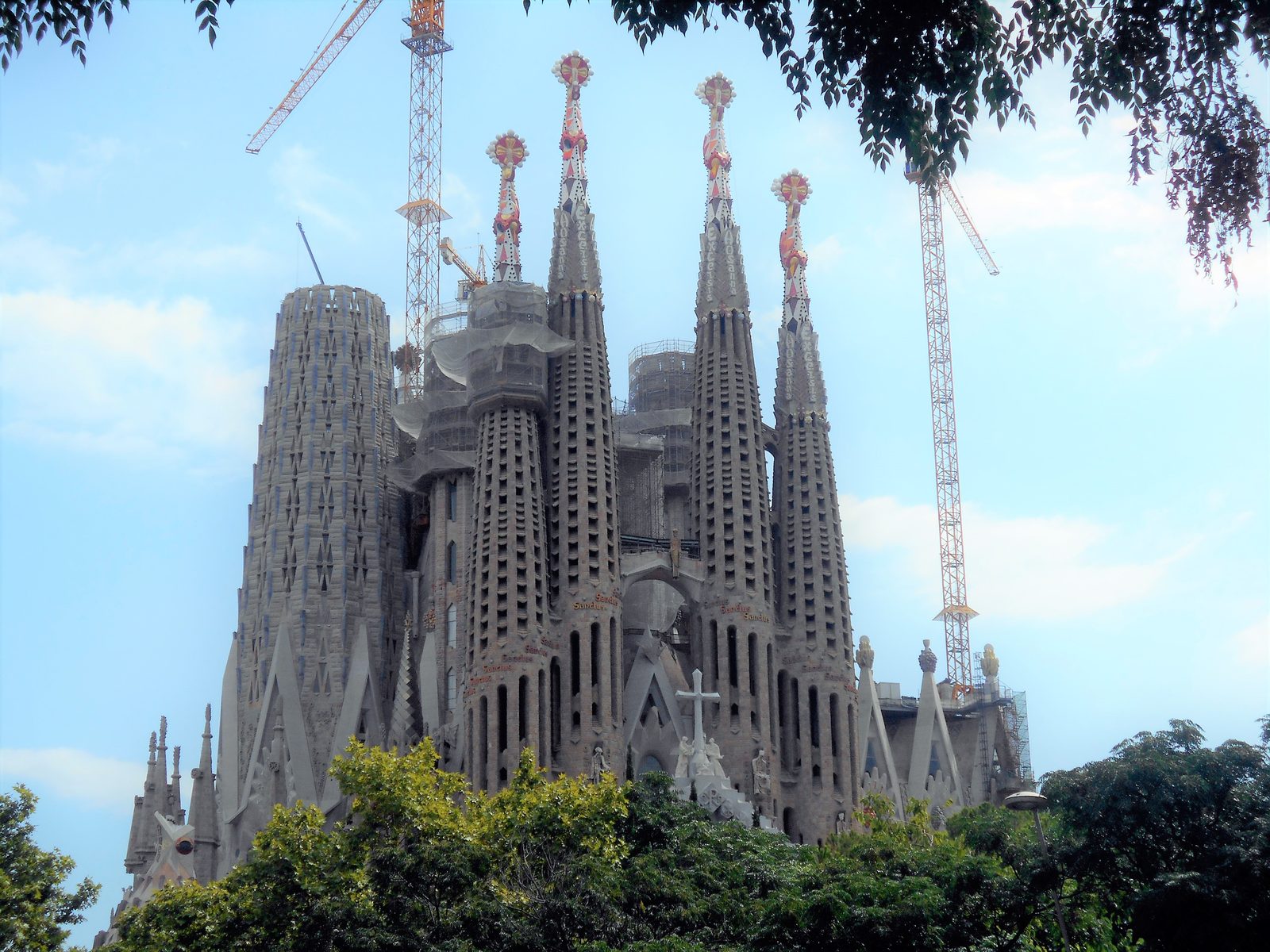
Sagrada Familia: Why Gaudi Designed It to Outlive Him
The easiest way to misunderstand the Sagrada Familia is to treat its long construction as a simple delay. That reading misses what makes the building so powerful. The stronger explanation is that Antoni Gaudi turned time into part of the architecture.
That is why the Basilica still feels strangely coherent even though it has been built across multiple generations. On Saturday, August 1, 2026, it is also an unusually timely subject. This year marks the centenary of Gaudi's death, and the official Sagrada Familia record shows that the exterior of the tower of Jesus Christ was completed on February 20, 2026, then blessed and illuminated on June 10, 2026, during the centenary commemoration.
If you only know the building as "the famous unfinished church in Barcelona," you miss the deeper lesson. The real story is how Gaudi developed a project large enough, legible enough, and symbolically clear enough to continue after him without becoming somebody else's building.
It Started as a Conventional Project and Became Something Else
The official history of the Temple is worth revisiting because it clears up a common myth. Gaudi did not begin the project from zero. The first design was prepared in 1882 by Francisco de Paula del Villar. Gaudi took over in 1883 and redirected the work into a far more ambitious vision.
That matters because the Sagrada Familia was never just a facade experiment. It became a total architectural system: structure, symbolism, light, towers, circulation, and liturgical meaning all tied together. The official Gaudi profile from the Basilica notes that he devoted more than 40 years to the Temple and spent the last 12 years of his life completely dedicated to it.
By then, the project was no longer a normal commission. It was the central work of his life.
Why the Long Construction Is Not Just a Delay
Many famous buildings survive their architects. Very few make that survival part of the work's identity. The Sagrada Familia does.
The official timeline shows how revealing Gaudi's final years were. In 1914 he began working exclusively on the Temple. In 1925 the bell tower of Saint Barnabas on the Nativity Facade was completed, the only tower he would see finished. He died in 1926, and his disciple Domènec Sugranyes took over.
So what does "Gaudi designed it to outlive him" actually mean here?
It does not mean he left behind a frozen finished set of instructions for every visible detail. It means he built the project as a transferable architectural language. The clearest evidence is what happened after disaster. In 1936, during the Spanish Civil War, plans and photographs were burned and plaster models were smashed. Yet the official history states that work resumed using material saved from Gaudi's workshop and reconstructed from published plans and photographs.
That is the key point. The project endured because Gaudi had embedded its logic in more than one form. Drawings mattered, but models, geometry, symbolism, and the already built portions mattered too.
Why It Still Feels Coherent in 2026
Plenty of long-running buildings end up feeling patched together. The Sagrada Familia does not always escape debate, but it remains unusually unified for a project of this duration.
Part of that comes from how the interior works. The Basilica's official architecture blog describes the columns as tree-like and double-twisting, built to absorb and distribute loads like a stone forest. Its official stained-glass explanation shows the same unity of intention: cooler tones on one side, warmer reds and oranges on the other, turning light into part of the spatial argument rather than mere decoration.
This is why the building rarely reads as a pile of disconnected flourishes. Gaudi's architecture is expressive, but it is not arbitrary. The geometry, structure, and symbolism keep reinforcing one another.
That coherence also helps explain why UNESCO recognized Gaudi's work on the Nativity Facade and the Crypt as part of the Works of Antoni Gaudi. The World Heritage listing does not certify the entire later Basilica. It specifically recognizes the parts most directly tied to Gaudi's exceptional contribution.
The 2026 Milestone Makes the Original Idea Easier to See
This is one reason the centenary year matters. It is not only ceremonial. It makes the architecture easier to read.
According to the Sagrada Familia's official record, the upper arm of the cross on the tower of Jesus Christ was installed on February 20, 2026, completing the exterior of the Temple's tallest central tower. On June 10, 2026, the Basilica held the central commemoration of the hundredth anniversary of Gaudi's death, and the tower was blessed and illuminated.
Those facts create a useful lens for readers right now. They show that the Sagrada Familia is not interesting only as a monument from the past. It is still an active construction culture built around a design system that has survived its author for a century.
Three Design Lessons Hidden in the Basilica
1. A building can be unfinished without being unresolved
The Sagrada Familia has taken a very long time to build, but that is different from saying it lacks architectural clarity. Its core ideas remain visible.
2. Symbolism works better when structure supports it
Gaudi did not add meaning after the fact. Light, columns, towers, and liturgical narrative all work together.
3. Big architecture needs a language that others can continue
The project survived Gaudi's death, the destruction of 1936, and decades of changing technology because the design logic could be transmitted across generations.
FAQ
Why is the Sagrada Familia still famous?
It is famous because it combines extraordinary formal invention with a construction history unlike almost any other major building. It is both a masterpiece of Gaudi and a live test of whether architecture can outlast its author without losing coherence.
Did Gaudi finish the Sagrada Familia?
No. Gaudi took over the project in 1883, devoted more than 40 years to it, and died in 1926. The bell tower of Saint Barnabas on the Nativity Facade was the only tower he saw completed.
What parts of the Sagrada Familia are officially recognized by UNESCO?
UNESCO's Works of Antoni Gaudi listing includes Gaudi's work on the Nativity Facade and the Crypt of the Sagrada Familia.
What happened at the Sagrada Familia in 2026?
The official Basilica timeline says the exterior of the tower of Jesus Christ was completed on February 20, 2026. On June 10, 2026, the Basilica commemorated the centenary of Gaudi's death and blessed and illuminated that tower.
Can you visit the Sagrada Familia?
Yes. As checked on August 1, 2026, the official site lists online ticketing, timed entry, and current opening hours on its visitor pages.
Final Thought
The Sagrada Familia matters because it turns a difficult architectural question into a built answer. What happens when the architect is gone but the work is still alive? Gaudi's response was not to make a small building he could finish quickly. It was to make a system, a language, and a structure of meaning strong enough to continue without him.
Internal Link Suggestions
- Antoni Gaudi's Casa Batllo: Why Barcelona Covers It in Roses Every April
- Barcelona Pavilion: Why an Almost Empty Building Feels Complete
- Le Corbusier's Chandigarh: The Modernist Capitol That Still Teaches Us How to Build
Sources Checked
- https://sagradafamilia.org/en/history-of-the-temple
- https://sagradafamilia.org/en/antoni-gaudi
- https://sagradafamilia.org/en/-/la-sagrada-familia-commemorara-el-centenari-de-la-mort-d-antoni-gaudi-amb-un-programa-d-actes-propis-que-s-iniciaran-a-l-octubre
- https://sagradafamilia.org/en/-/benediccio-i-inauguracio-de-la-torre-de-jesucrist
- https://sagradafamilia.org/en/schedules-how-to-get
- https://blog.sagradafamilia.org/en/columns-sagrada-familia-geometry-mechanics-materials-stone-forest/
- https://blog.sagradafamilia.org/en/stained-glass-light-colour-creation/
- https://whc.unesco.org/en/list/320/
- https://commons.wikimedia.org/wiki/File:Exterior_Sagrada_Fam%C3%ADlia2.jpg

Image Download Links
- https://commons.wikimedia.org/wiki/File:Exterior_Sagrada_Fam%C3%ADlia2.jpg
- https://commons.wikimedia.org/wiki/Special:FilePath/Exterior_Sagrada_Fam%C3%ADlia2.jpg

Wikimedia Commons (ver arquivo original).