S. R. Crown Hall is often praised as a glass-and-steel icon, but its deeper lesson is how Mies turned one open room into a building that can keep changing without losing its identity.
Matheus Rudo Oliveira · 2026-11-02
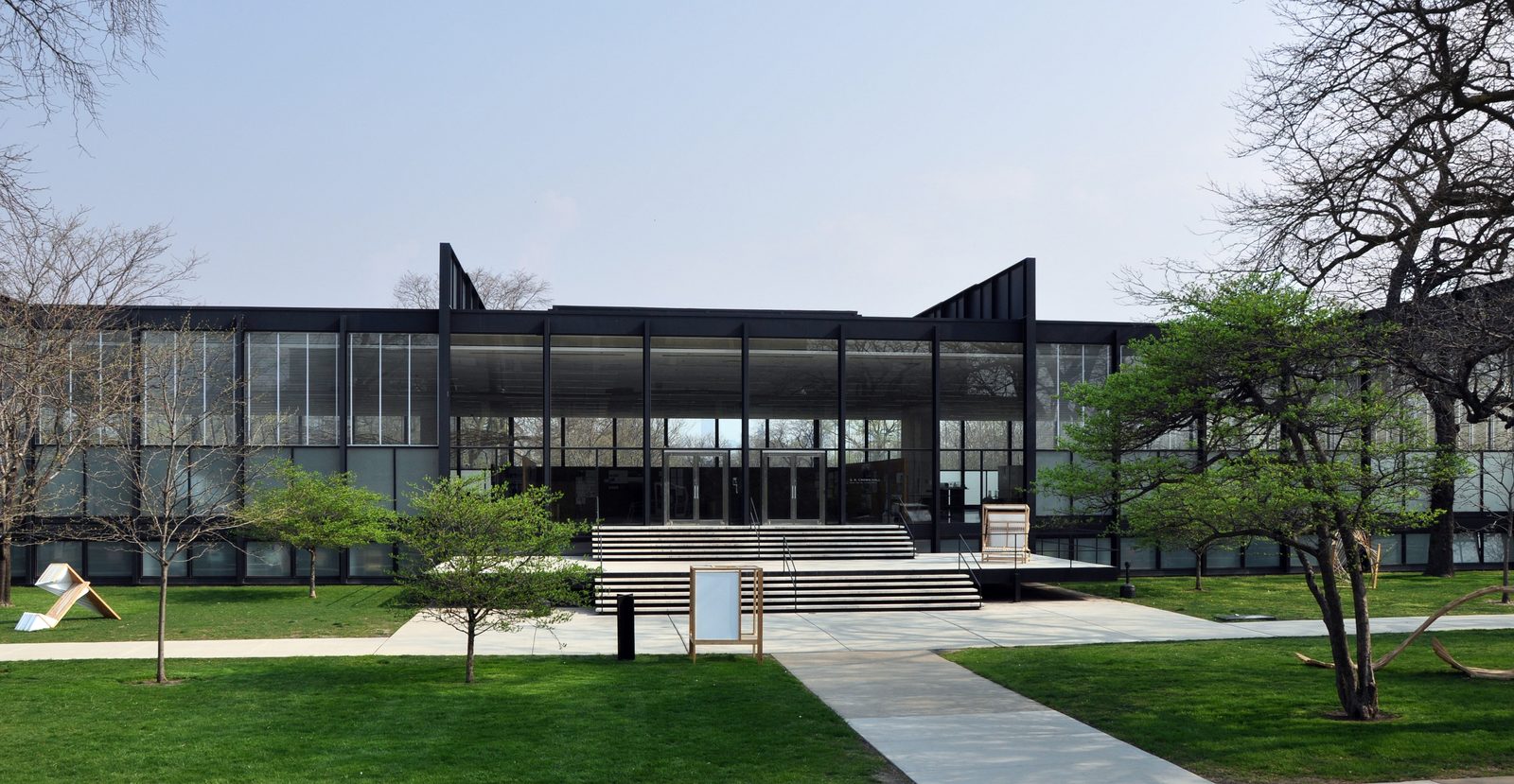
S. R. Crown Hall is usually introduced as a masterpiece of Miesian minimalism, but that description can feel too polite. What makes the building memorable is not only that it looks disciplined. It is that Ludwig Mies van der Rohe used the Illinois Institute of Technology commission to test how much architecture one room could hold. The National Park Service describes Crown Hall, built between 1950 and 1956, as a critically important monument in postwar construction, and the Chicago Architecture Center notes that it was completed in 1956 to house IIT's College of Architecture. Those dates matter because the building still feels current.
Why the room still feels radical
The key idea is what Mies called universal space. In its National Historic Landmark nomination, Crown Hall is described as the clearest statement of his philosophy of a universal building type. The Mies van der Rohe Society makes the point even more plainly: the building's column-free interior created an unobstructed space that could adapt to different uses over time.
That is why Crown Hall does not read like a neutral box. It feels precise, but also strangely generous. The same Mies Society page notes that the one-story building sits over a raised basement and that the South Porch reads almost like a floating pedestal. So even before you enter, the architecture is doing two things at once: making a ceremonial object and protecting a flexible working interior.
The proof is in how the building keeps being used
Plenty of modern buildings claim flexibility. Crown Hall has had to prove it for decades. According to an April 17, 2026 IIT article, Crown Hall's exhibitions often require studio space to be dismantled and then quickly rebuilt. That small operational detail is more revealing than a theory lecture. It shows that the building is not admired only as an artifact. It is still being tested by everyday academic life, and the room keeps absorbing those changes.
This also explains why architects keep treating Crown Hall as a pilgrimage site. The building is stripped down, but not fragile. Its openness is not an empty gesture. It is a working argument about how structure, use, and dignity can stay aligned.
Why S. R. Crown Hall is a strong topic right now
As of July 8, 2026, Crown Hall has unusual live relevance. The Chicago Architecture Center is actively running its Mies and Modernism: The IIT Campus tour, keeping public attention on the campus. At the same time, the Mies van der Rohe Society says the South Porch and Steps restoration was set to begin on June 1, 2026. That makes this more than a standard modernist classic story. Readers are not just looking at a frozen icon; they are looking at a building whose entrance, upkeep, and public life are still part of the architecture.
FAQ
Why is S. R. Crown Hall famous?
It is widely regarded as one of Ludwig Mies van der Rohe's clearest statements of universal space and remains the home of IIT's College of Architecture.
When was S. R. Crown Hall built?
National Park Service records place it between 1950 and 1956, and Chicago Architecture Center records list 1956 as the original completion date.
What does "universal space" mean at Crown Hall?
It means the main interior was designed as a large, unobstructed room that could be adapted over time rather than locked into a single rigid arrangement.
Final thought: Crown Hall still feels powerful because Mies did not make flexibility look casual. He made it feel inevitable.
Sources Checked:
- https://www.architecture.org/online-resources/buildings-of-chicago/crown-hall
- https://www.architecture.org/city-tours/mies-modernism-the-iit-campus
- https://www.miessociety.org/mies-buildings/blog-post-title-two-793r4-yjaj6-fm4kw-2krsa-shmmd-6z38e-4ejzw
- https://www.miessociety.org/current-restoration-projects
- https://arch.iit.edu/news/crown-halls-caretaker-retires
- https://www.nps.gov/subjects/nationalhistoriclandmarks/guide.htm
- https://npgallery.nps.gov/NRHP/GetAsset/NHLS/01001049_text
- https://commons.wikimedia.org/wiki/File:Crown_Hall_1.jpg

Image Download Links:
- https://commons.wikimedia.org/wiki/File:Crown_Hall_1.jpg
- https://commons.wikimedia.org/wiki/Special:FilePath/Crown_Hall_1.jpg
- images/featured-image.jpg

Internal Link Suggestions:
- Link to the existing Rudo Studios post on Farnsworth House with anchor text like
another Mies project where openness becomes an argument rather than a style - Link to the existing Rudo Studios post on Carpenter Center with anchor text like
a different modernist building where circulation does the real architectural work
Wikimedia Commons (ver arquivo original).