Brasilia Cathedral is famous on the skyline, but its real surprise begins below ground and opens into one of modern architecture's most unsettling interiors.
Matheus Rudo Oliveira · 2026-11-02
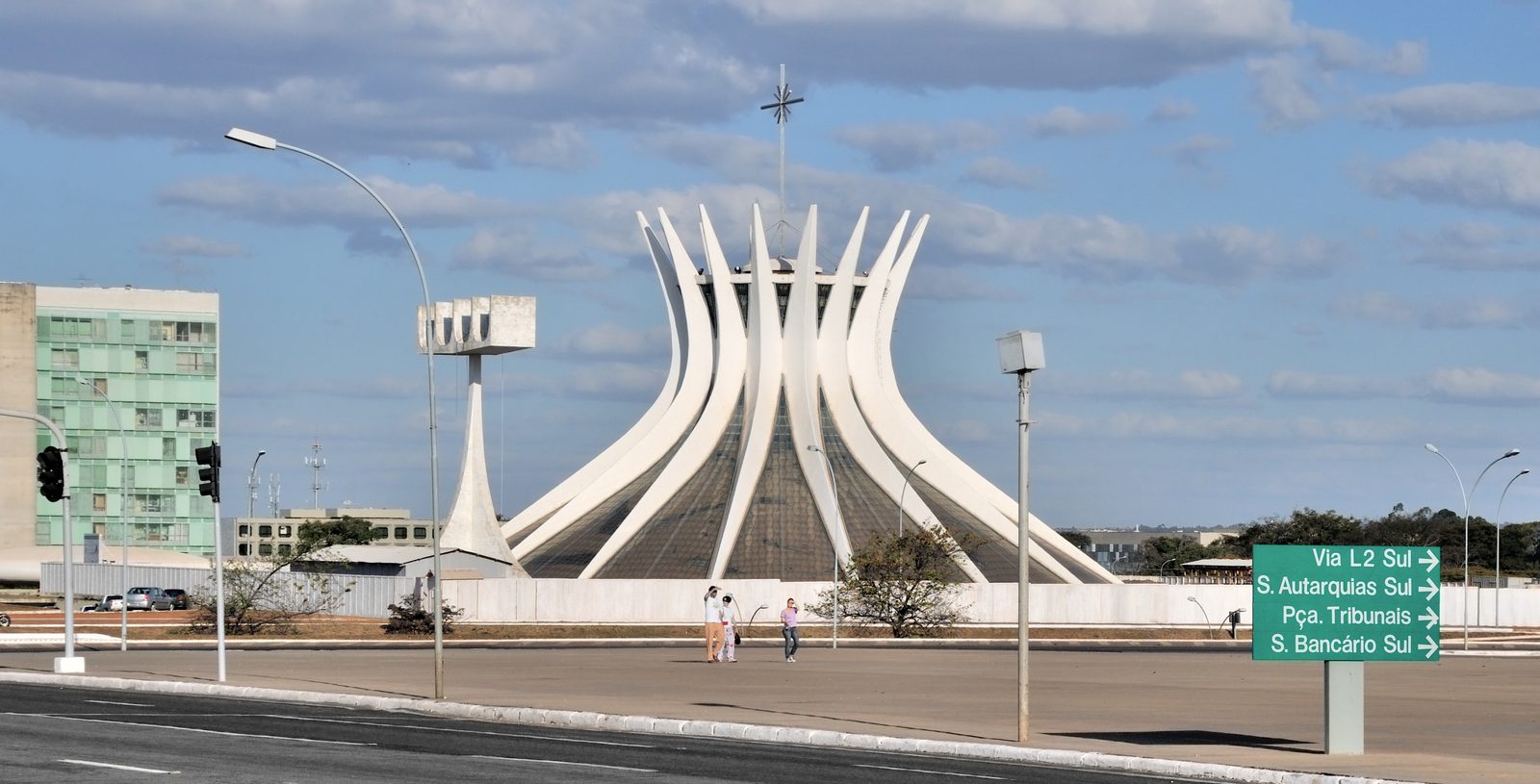
Brasilia Cathedral is famous enough from the outside that many people think they already know it. They recognize the white crown of concrete on the skyline, understand that Oscar Niemeyer designed it, take the obligatory photograph, and move on. The strange part is that Niemeyer seems to have anticipated exactly that mistake. The building's real drama does not begin on the horizon. It begins underground, with the dark access ramp that lowers you before the interior suddenly opens up. Few modern churches make their first impression through descent rather than facade, and that single move is a big reason the cathedral still feels unsettling in the best way.
The official history is already unusual. The foundation stone was laid on September 12, 1958, the main external structure was completed in 1960, and the cathedral was inaugurated only on May 31, 1970. Its sixteen parabolic concrete columns are easy to remember once you know the number, but the more memorable fact is what they hold emotionally rather than structurally. Outside, they read almost like a diagram. Inside, the building becomes an atmosphere. The entrance is marked by Alfredo Ceschiatti's Evangelists, three suspended angel sculptures float above the nave, and Marianne Peretti's stained glass washes the space in blue, green, white, and brown light. That sequence explains why the cathedral belongs in any serious conversation about Brasilia: it is not only an icon for the city, but one of the clearest examples of Niemeyer designing perception itself.
This is also why the cathedral feels more radical inside than on the skyline. Plenty of famous buildings look good from a distance and become less convincing once you enter them. Brasilia Cathedral does the reverse. It withholds its best effect until you are already committed to the route. That makes it more than a sculptural object and more than a postcard stop within the UNESCO-listed capital. It becomes a lesson in how architecture can choreograph expectation, darkness, release, and color without raising its voice. If you are wondering when it was built, who designed it, or why it became so famous, those answers are all finally secondary to the experience itself: Niemeyer turned a church visit into a carefully staged change of state.
Wikimedia Commons (ver arquivo original).