Tokyo's National Museum of Western Art matters for more than its collection. It shows how Le Corbusier turned a museum into a repeatable architectural idea.
Matheus Rudo Oliveira · 2026-11-02
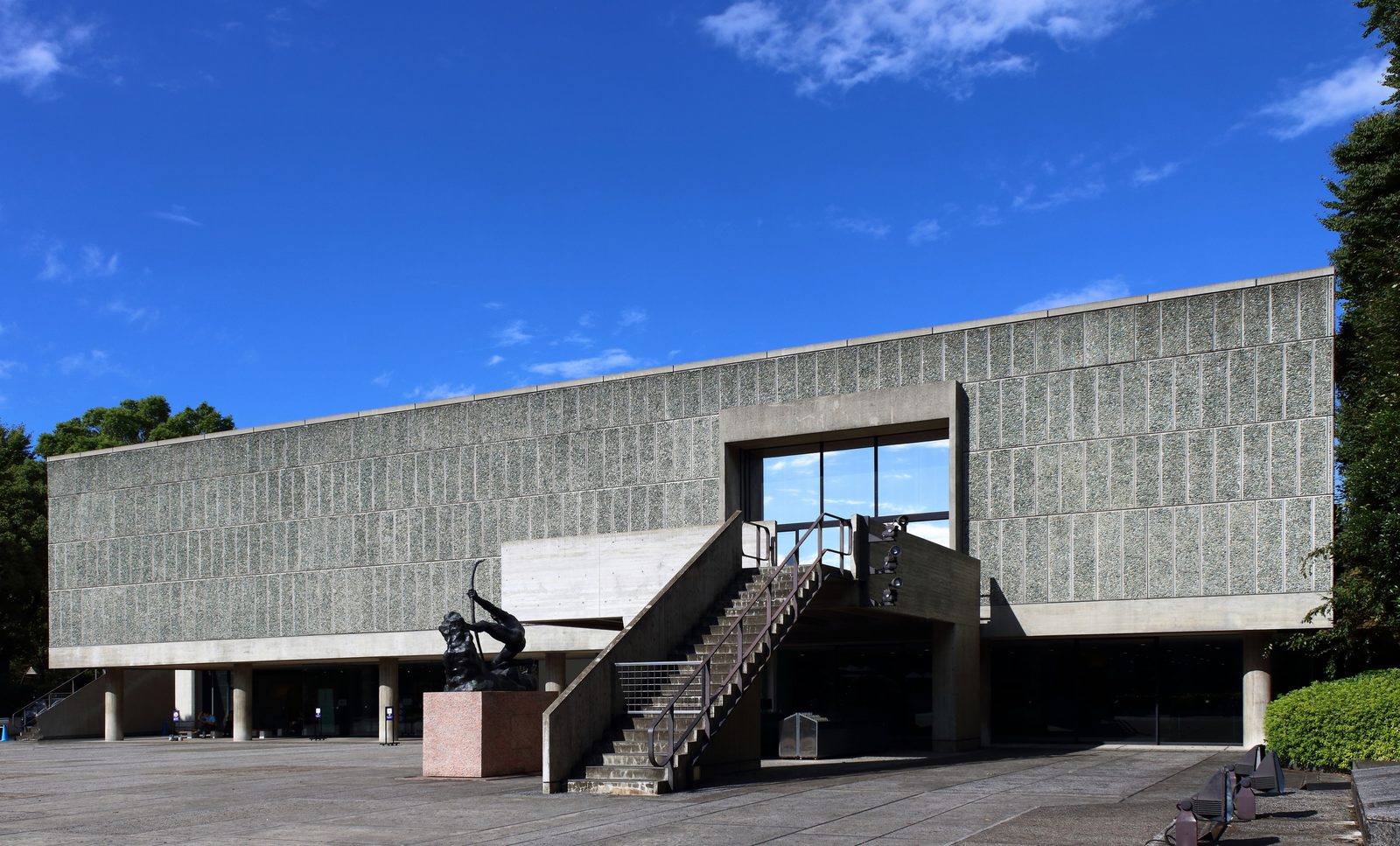
National Museum of Western Art: Why Le Corbusier Treated the Museum as a Prototype
Many Le Corbusier buildings are remembered as singular objects: a villa, a chapel, a housing block, a government complex. The National Museum of Western Art in Tokyo feels different because it was meant to prove an idea that could travel.
That idea was the "Museum of Unlimited Growth." The Fondation Le Corbusier explains that the Tokyo project was drawn as a version of Le Corbusier's squared-spiral museum concept, first devised in 1931. The building is not just a container for art. It is a prototype for how a museum could expand without losing its logic.
Why Tokyo Was the Right Place for the Experiment
The museum's own architecture page says the Main Building was completed in March 1959 and presented as a symbol of the resumption of diplomatic ties between Japan and France after World War II. Tokyo did not receive a generic late work by a famous architect. It received a test case realized locally under the supervision of Junzo Sakakura, Kunio Maekawa, and Takamasa Yoshizaka.
The Building Makes More Sense as a System Than as a Facade
The most important thing is not one photogenic exterior view. It is the way the building organizes movement.
The Fondation Le Corbusier frames the project as a squared spiral. Instead of treating galleries as a stack of disconnected rooms, Le Corbusier treated the museum as a sequence that could continue growing. The architecture is less about one frozen composition than about a repeatable rule.
The Forecourt Proves the Museum Was Never Only About the Box
The current NMWA architecture page documents the 2020 to 2022 restoration of the forecourt. The museum says the work aimed to recover original relationships, including the west-side approach, railings, sculpture placement, and paving joints based on Le Corbusier's Modulor.
That matters because it shows the project was not just a concrete shell for paintings. Arrival, sculpture, proportion, and movement across the site were part of the design argument from the beginning.
Why the Museum Has a Fresh Hook in July 2026
As of July 27, 2026, the museum's current exhibitions page lists a collection highlight, "Upon the Centennial of Claude Monet's Death," running from July 22 to September 23, 2026, alongside the special exhibition "Rembrandt the Etcher" running from July 7 to September 23, 2026. The building is not surviving as a sealed monument. It is still being used hard.
Why UNESCO Recognition Fits
UNESCO's entry for The Architectural Work of Le Corbusier says the serial site demonstrates the invention of a new architectural language and the global reach of Le Corbusier's ideas. The Tokyo museum belongs in that group because it translates those ideas into a museum type that could be reproduced and expanded.
What Architects Can Still Learn From It
1. A museum can be a method, not only a monument
The strongest part of the project is its logic for growth and circulation, not just its image.
2. Site planning carries the argument
The restored forecourt makes clear that sculpture, approach, and proportion were core architectural material.
3. Flexibility works best when it has form
Le Corbusier did not treat adaptability as vagueness. He gave it a strict spatial order.
FAQ
What is the National Museum of Western Art?
It is a museum in Tokyo whose Main Building was designed by Le Corbusier and completed in March 1959.
Why is the National Museum of Western Art important in architecture?
It is one of the clearest realized versions of Le Corbusier's Museum of Unlimited Growth concept and is part of a UNESCO World Heritage listing.
When did the National Museum of Western Art become a UNESCO World Heritage site?
The museum was included in the transnational Le Corbusier inscription in 2016.
Can you visit the National Museum of Western Art?
Yes. The museum's visitor information page provides current hours, ticket details, and access information.
Final Thought
The National Museum of Western Art lasts in memory because it was never meant to be only a finished object. Le Corbusier treated it as a working prototype for how a museum could grow and guide movement. That is why it still feels more alive than many more spectacular museum buildings.
Internal Link Suggestions
- Le Corbusier's Chandigarh: The Modernist Capitol That Still Teaches Us How to Build
- Maison La Roche: Why Le Corbusier Turned a House Into a Walkthrough
- Neue Nationalgalerie: Why Mies Made a Museum Feel Like Weather
Sources Checked
- https://www.nmwa.go.jp/en/about/building.html
- https://www.nmwa.go.jp/en/exhibitions/current.html
- https://www.nmwa.go.jp/en/visit/index.html
- https://www.fondationlecorbusier.fr/en/work-architecture/achievements-national-museum-of-western-art-tokyo-japan-1955/
- https://www.fondationlecorbusier.fr/en/tour/other-le-corbusier-destinations/
- https://whc.unesco.org/en/list/1321/
- https://commons.wikimedia.org/wiki/File:National_Museum_of_Western_Art.JPG

Image Download Links
- https://commons.wikimedia.org/wiki/File:National_Museum_of_Western_Art.JPG
- https://commons.wikimedia.org/wiki/Special:FilePath/National%20Museum%20of%20Western%20Art.JPG

Wikimedia Commons (ver arquivo original).