Tokyo demolished the Nakagin Capsule Tower in 2022, yet the building feels more relevant than ever. Here is why Kisho Kurokawa's modular experiment still shapes how we think about cities, housing, and preservation.
Matheus Rudo Oliveira · 2026-11-02
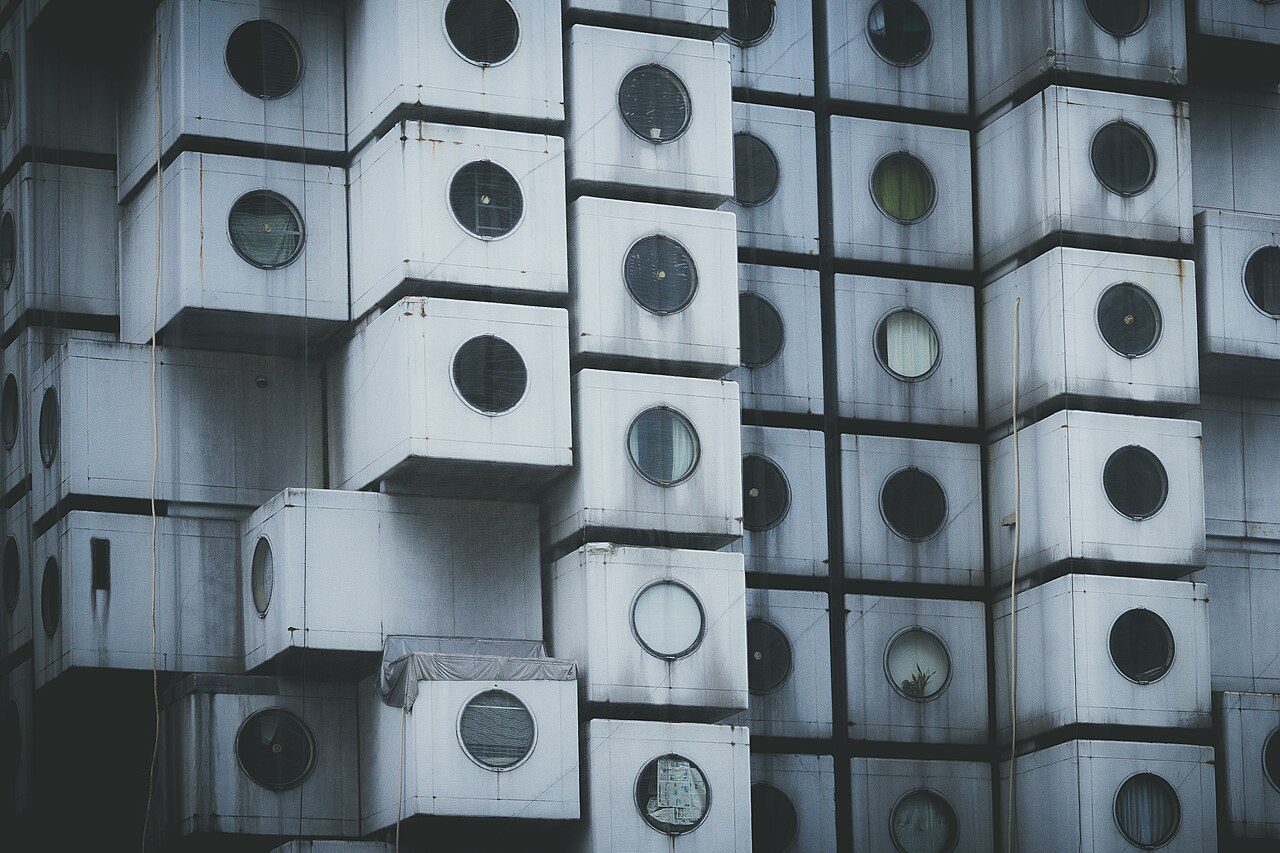
Kisho Kurokawa's Nakagin Capsule Tower has been written about for decades, but it has become newly interesting again for a simple reason: the building is gone, yet its afterlife keeps expanding. As of May 1, 2026, MoMA's exhibition The Many Lives of the Nakagin Capsule Tower is still on view in New York through July 12, 2026, giving one of modern architecture's most photographed experiments a fresh public audience.
That timing matters. The Nakagin Capsule Tower is no longer just a cult object from 1970s Tokyo. It is now a test case for how architecture survives after demolition, how adaptable buildings really are, and why some futuristic ideas feel more urgent after they fail than when they are first built.
Why the Nakagin Capsule Tower still pulls people in
When Kurokawa completed the Nakagin Capsule Tower in Tokyo's Ginza district in 1972, he was presenting more than a quirky apartment block. According to MoMA's exhibition text, the structure consisted of 140 single-occupancy capsules prefabricated offsite and attached to two concrete-and-steel cores. The museum calls it the defining realization of Metabolism, the Japanese architectural movement that imagined buildings and cities as systems able to grow, adapt, and change over time.
What Metabolism actually promised
If the word "Metabolism" sounds abstract, the Nakagin Capsule Tower makes it easier to grasp. MoMA's definition of Metabolist architecture describes the movement as an avant-garde current in 1960s Japan whose architects imagined cities and buildings that could adapt over time. Kurokawa was one of the movement's founders, and the National Art Center, Tokyo notes that he cofounded it in 1960.
The detail that made the tower famous
The Nakagin Capsule Tower is often remembered as a science-fiction image, but the most important fact about it is practical, not stylistic. In MoMA's 2025 press release for the current exhibition, the museum explains that Kurokawa originally intended the capsules to be replaced every 25 to 35 years while the cores remained in place. That was the building's central promise. It was not supposed to age like a conventional apartment block.
Why the modular dream never fully happened
This is where the Nakagin Capsule Tower becomes more than an icon. It becomes a cautionary tale.
Why demolition did not end the story
Most demolished buildings become history. Nakagin became a second project.
What architects can still learn from Nakagin
The easiest reading of the tower is that it failed. That reading is incomplete.
Why the building still belongs on a travel and design radar
You can no longer stand in Ginza and see the original Nakagin Capsule Tower in place, but the project is still travel-worthy in a broader sense. The current MoMA exhibition gives visitors a direct encounter with a restored capsule, original drawings, models, photographs, film, and interviews. For architecture travelers, that is not a minor substitute. It is now one of the clearest public ways to understand how the building actually lived, changed, and was remembered.
FAQ
What is the Nakagin Capsule Tower?
The Nakagin Capsule Tower was a 1972 building in Tokyo's Ginza district designed by Kisho Kurokawa. It consisted of 140 prefabricated single-occupancy capsules attached to two concrete-and-steel cores, according to MoMA.
Why is the Nakagin Capsule Tower famous?
It became the defining realization of Metabolist architecture, a movement that imagined buildings able to adapt over time. Its capsule-based design made it one of the most recognizable architectural icons of postwar Japan.
Was the tower really designed to change over time?
Yes. MoMA's press materials state that Kurokawa intended the capsules to be replaced every 25 to 35 years while the cores remained. That vision was never fully realized.
Final thought
The Nakagin Capsule Tower still matters because it was never just a strange object from Tokyo. It was an argument about how buildings should live, change, and survive. Even in fragments, that argument still feels ahead of us.
Wikimedia Commons (ver arquivo original).