Marcel Breuer's 1949 house prototype still feels fresh because it treated affordability, family life, and architectural quality as problems worth solving together.
Matheus Rudo Oliveira · 2026-11-02
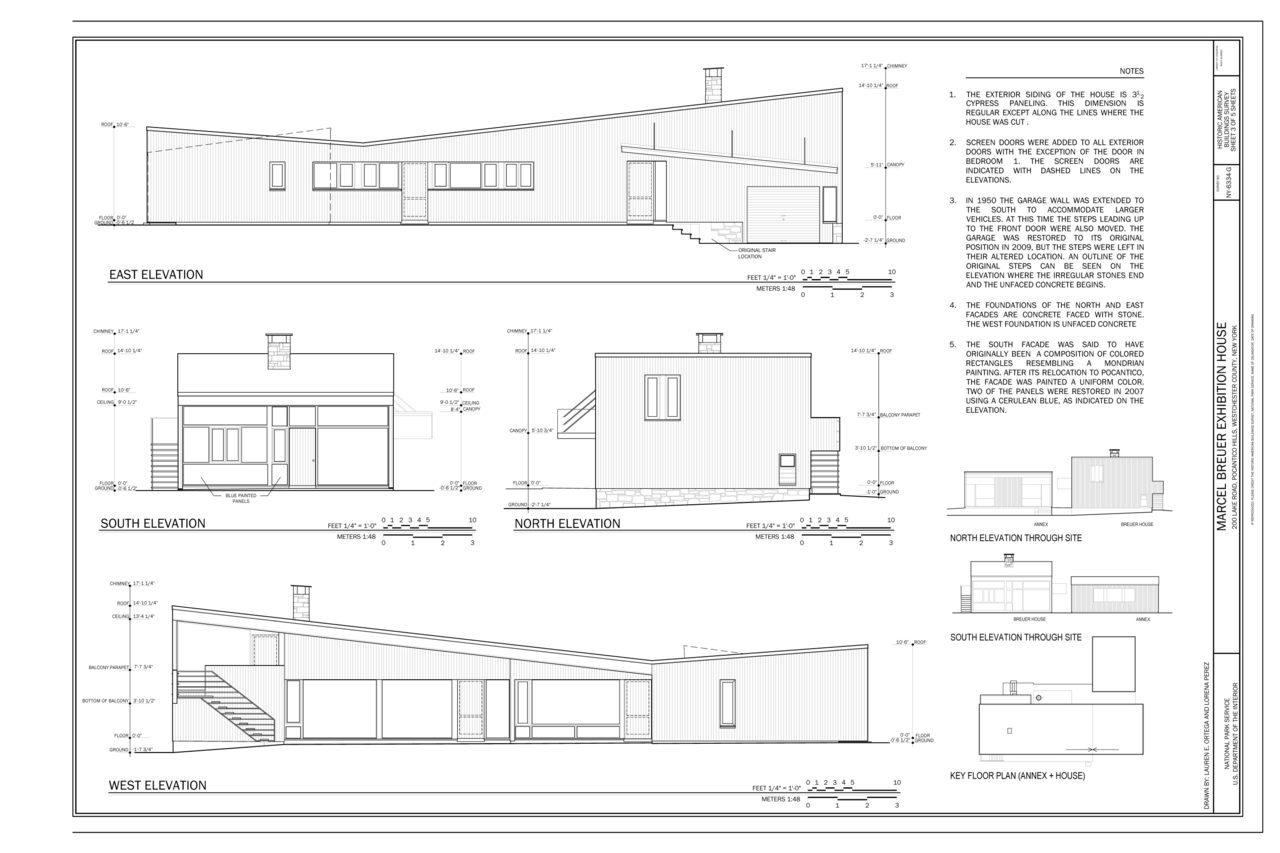
Marcel Breuer's House in the Museum Garden still feels fresh because it never treated domestic life as a secondary problem. Too many famous modern houses impress from the street and become less convincing once you start asking how a family would actually use them. Breuer's 1949 prototype does the opposite. Shown at MoMA from April 12 to October 30, 1949, it was presented as a buildable architect-designed country house, something a local contractor could construct rather than a remote masterpiece meant only for admiration. That premise remains surprisingly rare, which is one reason the house still feels more humane than many larger and more expensive homes.
The most memorable formal feature, the butterfly roof, turns out not to have been a gimmick at all. MoMA's own visitor survey reported that 85 percent of surveyed visitors approved of the inverted V-shaped roof, and the museum noted practical advantages too: the roof eliminated gutters and drains at the edges and created space for a second story at the higher end of the house. That is exactly the kind of useful curiosity fact architecture readers tend to remember. The house's appeal was never only visual. It came from how clearly Breuer tied appearance to daily use.
Its second life makes the story even better. After the exhibition closed, John D. Rockefeller Jr. bought the house, had it cut into four sections, and moved it to Pocantico Hills, where it was reassembled as a guest house. Later alterations drifted away from Breuer's concept, and restoration work became part of the building's meaning. So if you are asking what this Marcel Breuer house actually was, when it was exhibited, or why it still matters, the answer is consistent: it translated modern architecture into a practical, family-scaled argument about how people might live better without needing a grander house.
Wikimedia Commons (ver arquivo original).