Louis Kahn's final building still turns daylight, oak, linen, and silence into one of architecture's most memorable museum experiences.
Matheus Rudo Oliveira · 2026-11-02
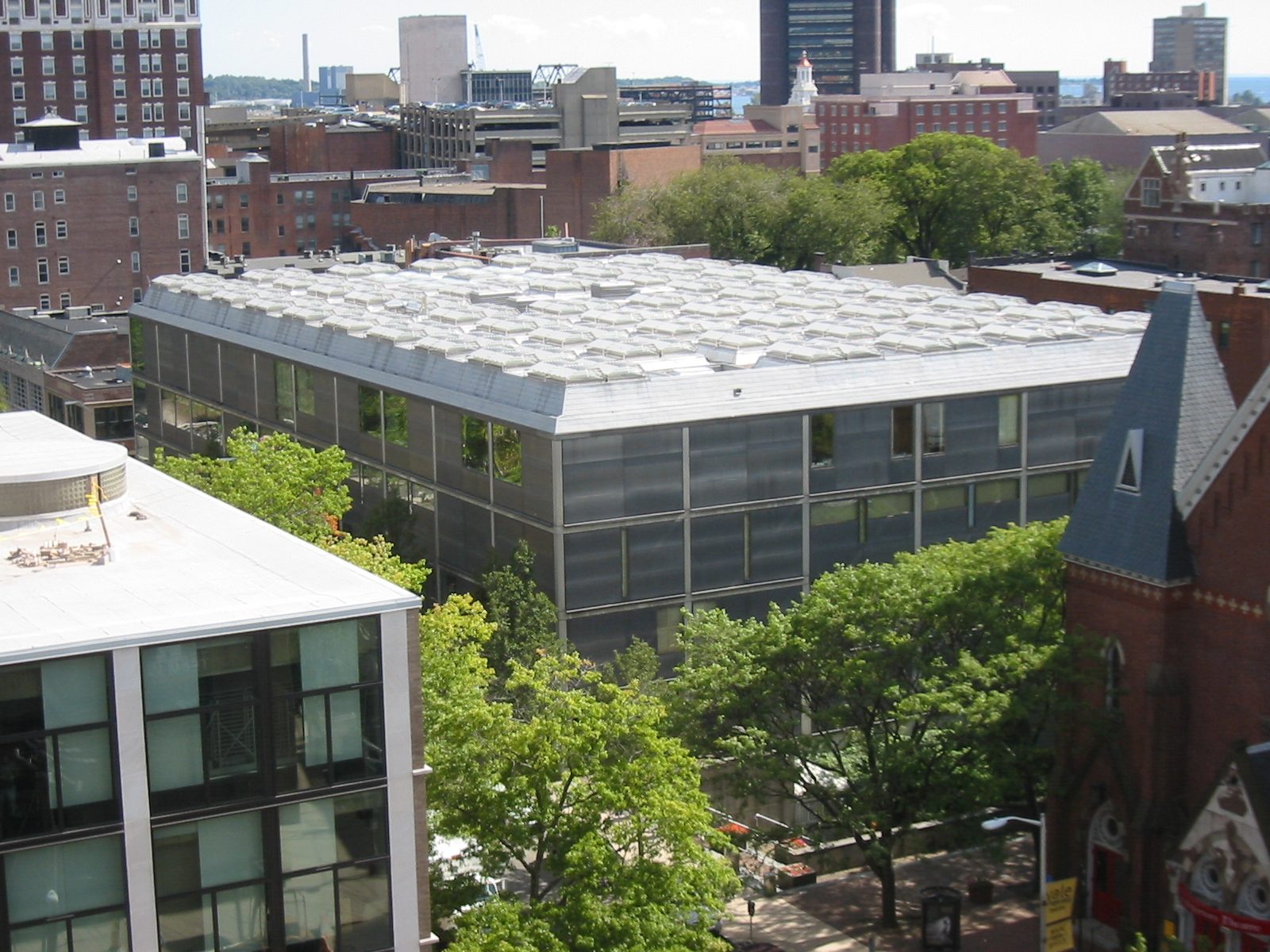
Louis Kahn's Yale Center for British Art stays with people for a reason that can be hard to summarize without sounding vague: the building makes attention feel slower and sharper at the same time. That is a rare museum quality. Opened to the public on April 19, 1977, three years after Kahn's death, the building faces his earlier Yale University Art Gallery across Chapel Street and was designed to house Paul Mellon's gift to Yale. Those facts are important, but the real fascination begins once you realize how little the museum needs to do theatrically in order to remain memorable.
The Yale Center for British Art organizes itself around two courtyards and a daylight strategy so controlled that the atmosphere can feel almost self-effacing. Yet that calm is not emptiness. It is discipline. The museum's own description emphasizes that Kahn wanted as much natural light as possible, with artificial illumination stepping in only when necessary, and that insistence changes the entire psychology of the visit. The building also operates as both study center and gallery, which is one of its most useful and least flashy ideas. Many museums are built to overwhelm, accelerate, and produce quick visual certainty. Kahn's final building makes room for reading, comparison, hesitation, and return.
That is why the recent recognition it has accumulated over time actually makes sense. The AIA Twenty-Five Year Award and the Docomomo honors do not simply reward survival; they reward performance. The building still works. If you are asking why this museum matters, when it opened, or why people talk so much about light here, all of those answers collapse into a single experience: Kahn made a museum where quiet is not the absence of intensity but the condition that allows intensity to last.
Wikimedia Commons (ver arquivo original).