A mascot proposal for Tokyo’s Kita ward brings the fox legend of Ōji and the area’s papermaking history together in a single silhouette.
Matheus Rudo Oliveira · 2026-11-16
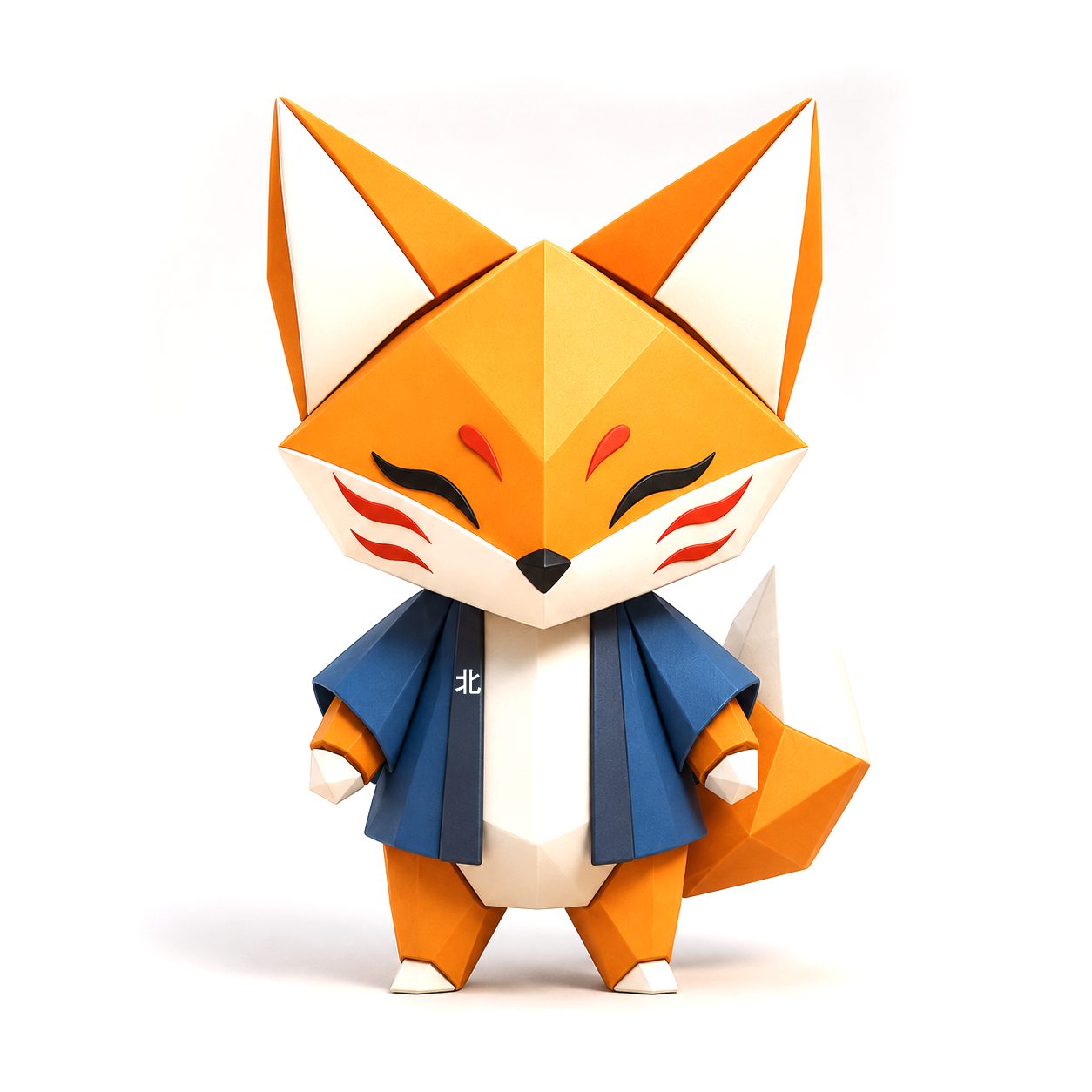
How do you bring a fox legend and a history of papermaking into a character that still reads at a small size? Kitakon was Matheus Rudo Oliveira and Luiz Eduardo Kenzo Igari Cavamura’s entry in the official mascot competition for Kita, a ward in Tokyo. They designed an origami fox. The proposal was not selected.
Why an origami fox?
In Ōji, the Paper Museum documents the opening of a large-scale paper mill in 1875. The Kita tourism guide describes the year-end procession that recalls the legend of foxes gathering in Ōji. A fold brings those two local references together: paper gives the figure its material, and the fox gives the paper its silhouette.
The ears and angular outline carry much of the design. In the flat artwork, those features have to remain recognisable without light and shadow. In the 3D model, the changes in plane make the folds easier to see. Together, the two versions show why it helps to resolve the outline first, then decide how much detail each application can carry.
What went into the character profile
Curious, quick and a little clumsy, Kitakon collects paper to fold and practises dancing for the fox procession. The character’s favourite things draw on places in Kita: azaleas in Asukayama, roses in Kyu-Furukawa Gardens and the windmills of Ukima. The catchphrase carries the same idea into speech: 「北区の魅力を、心を込めて折り合わせるコン!」 — “Folding Kita’s charms together with care, kon!”
Those details are useful in stories and presentation materials. The artwork needs only a few cues to make the character recognisable. Spreading the references across the drawing and the profile leaves room to mention the parks without adding flowers, wheels or other features to the outline.
What the design materials show
The project archive contains finished artwork, a 3D model, a flat version, an assembly sheet, origami studies and a costume study. Each answers a different design question. The flat version shows what survives when volume is removed. The assembly sheet and origami studies show how the folds were worked out. The costume study explores how the silhouette might fit a human body. These materials document the competition entry. Legibility at actual sizes and the feasibility of a costume would require separate tests.
What matters here is where each reference appears. The fold brings paper and fox together in the drawing. The places and habits belong to the character’s story. This gives the drawing room to simplify while keeping the character’s ties to Kita.
See more of the studio’s work in the graphic design portfolio.
Sources and credits
- Kita City — public vote for the official character.
- Paper Museum — history of papermaking in Ōji.
- Kita tourism guide — Ōji area and fox procession.
Design and images by Matheus Rudo Oliveira and Luiz Eduardo Kenzo Igari Cavamura. AI assisted with editing and translation.