The Kimbell Art Museum is often praised for its calm beauty, but the deeper lesson is how Louis Kahn turned daylight into part of the building's structural logic.
Matheus Rudo Oliveira · 2026-11-02
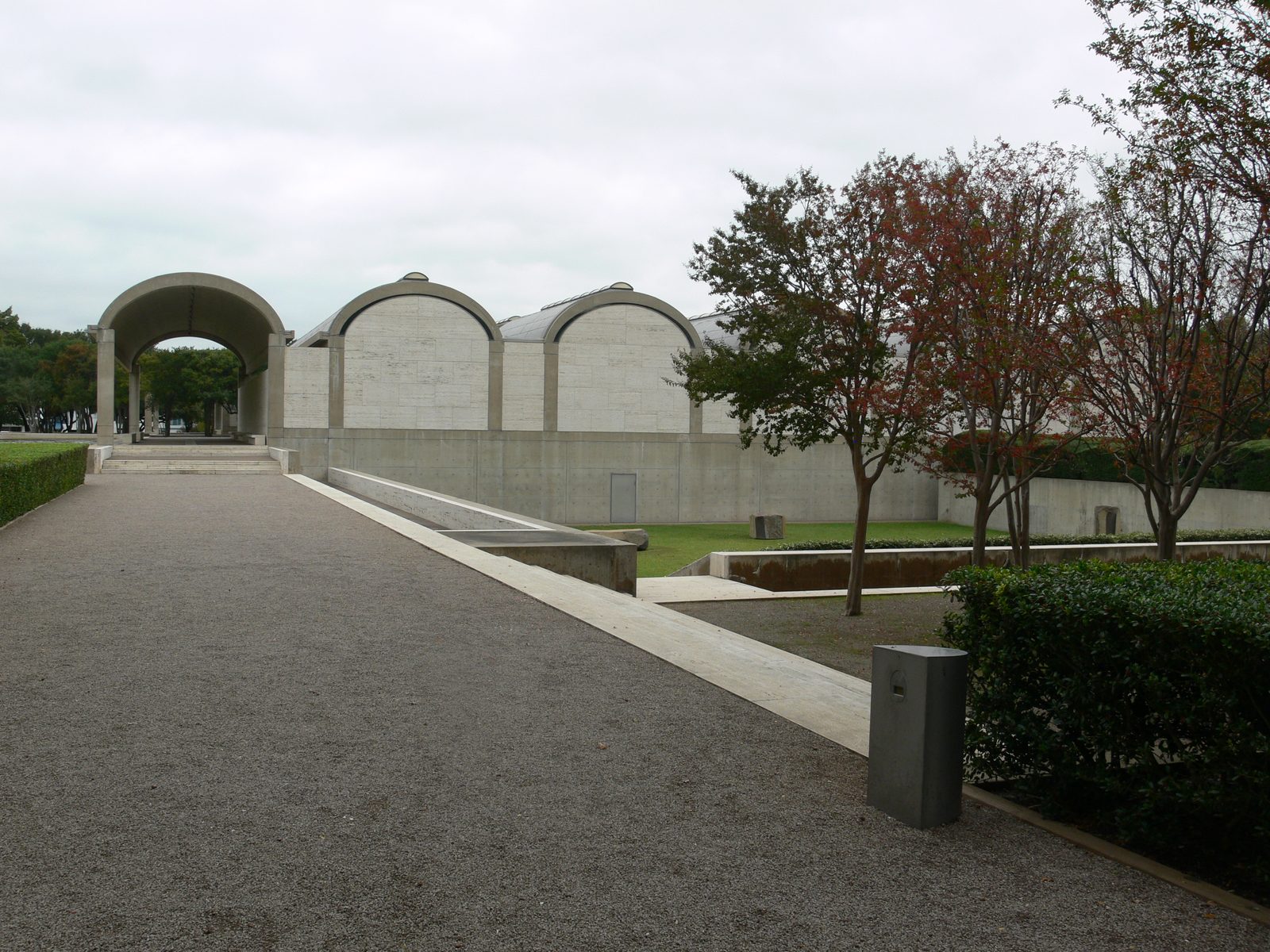
The Kimbell Art Museum is usually described as serene, but that word can make the building sound softer than it really is. Louis Kahn's real achievement was tougher and more exacting: he made daylight behave like part of the structure. At the Kimbell, light is not a finishing touch added after the plan is solved. The museum's cycloid vaults, narrow skylights, and pierced-aluminum reflectors work together so completely that illumination becomes part of the building's logic.
Why the light feels inevitable instead of dramatic
The Kimbell's architecture page says Kahn designed a building in which "light is the theme". The museum's longer building essay explains how natural light enters through skylights at the top of the vaults, then bounces off reflector panels before reaching the galleries. That distinction matters. The effect is not spotlighting or spectacle. It is controlled, diffuse, and slightly changeable across the day, which is why the rooms feel calm without becoming flat.
The vaults are the argument
The building opened to the public in 1972, after Louis Kahn was formally commissioned in 1966. What looks effortless is actually tightly ordered. The museum describes the plan as sixteen cycloid vaults arranged in three parallel groups, with three 100-foot west bays and three courtyards breaking the sequence. In the same essay, the Kimbell explains that Kahn developed the vault shape with engineer August Komendant and used post-tensioned concrete so each vault could direct its weight to only four corner columns. That is why the ceiling never reads as decoration. It is carrying the building's visual, structural, and environmental ideas at once.
Why the Kimbell still feels different from most museum icons
Many famous museums become legible as images before you ever visit them. The Kimbell resists that. From outside, its concrete, travertine, and porticos seem almost restrained. Inside, the building unfolds more slowly. The museum notes that the principal materials are concrete, travertine, and white oak, and even the proportions of the plan follow a strict mathematical order. That discipline is what keeps the galleries from feeling expressive for their own sake. They feel measured, inhabitable, and unusually precise.
The weekly engagement hook is real, but it is not the main reason this topic works now. As of July 6, 2026, the Kimbell calendar is listing a public Architecture: Two Buildings, One Museum tour for Saturday, July 11, 2026, from 2:00 to 3:15 p.m. The better reason to care is evergreen: the Kimbell remains one of the clearest examples of a building where climate control, structural reasoning, and emotional effect are all the same design problem.
FAQ
Why is the Kimbell Art Museum so famous?
Because Kahn solved museum light unusually well. The Kimbell's vaults, skylights, and reflector panels create natural illumination that is controlled enough for art and memorable enough to define the whole visit.
When did the Kimbell Art Museum open?
The Kimbell's Kahn building opened to the public in 1972, and the museum's architecture tour materials specify October 4, 1972.
What makes the Kimbell's vaults special?
They are cycloid vaults developed with engineer August Komendant. According to the museum's building essay, each vault directs weight to four corner columns while also accommodating skylights and light reflectors.
Final thought: The Kimbell Art Museum is not just a beautiful container for art. It is one of the rare buildings where the way light arrives is inseparable from the way the architecture thinks.
Sources Checked:
- https://kimbellart.org/art-architecture/architecture/kahn-building
- https://kimbellart.org/content/kahn-building-detail
- https://kimbellart.org/content/louis-i-kahn-biography
- https://kimbellart.org/calendar
- https://50.kimbellart.org/timeline/
- https://commons.wikimedia.org/wiki/File:Kimbell_Art_Museum_Fort_Worth_04.jpg

Image Download Links:
- https://commons.wikimedia.org/wiki/File:Kimbell_Art_Museum_Fort_Worth_04.jpg
- https://upload.wikimedia.org/wikipedia/commons/6/66/Kimbell_Art_Museum_Fort_Worth_04.jpg
- images/featured-image.jpg

Internal Link Suggestions:
- Link to the existing Rudo Studios post on the Salk Institute with anchor text like
another Louis Kahn project where light and silence do much of the architectural work - Link to the existing Rudo Studios post on the Yale Center for British Art with anchor text like
another museum where Kahn used daylight to shape how art is experienced
Wikimedia Commons (ver arquivo original).