The Guggenheim Bilbao makes more sense when you stop seeing it as a free-form sculpture and start reading it as a building shaped by a river, a bridge, and an industrial edge.
Matheus Rudo Oliveira · 2026-11-02
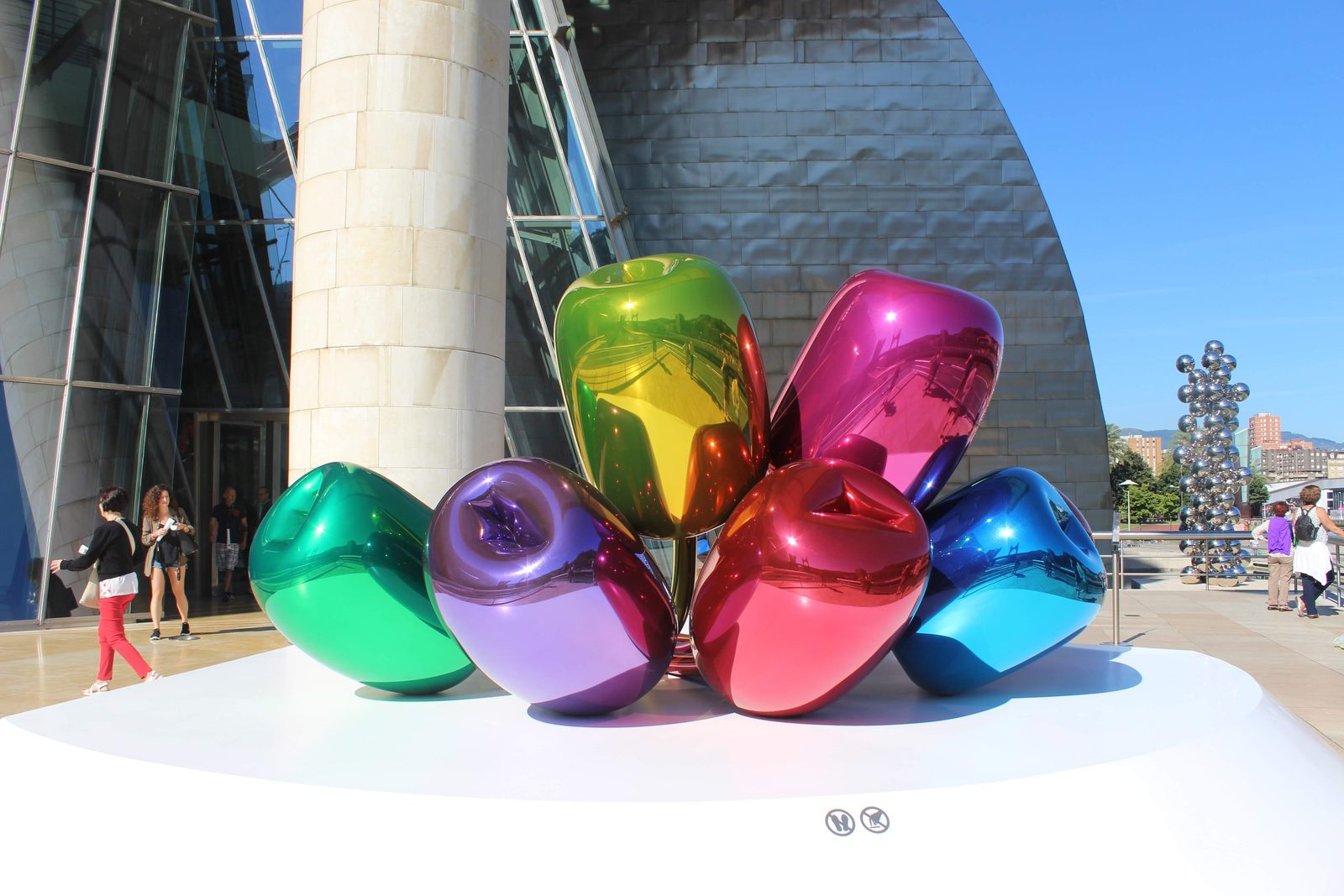
Guggenheim Bilbao: Why Gehry Made a Museum That Feels Like Part of the River
The Guggenheim Bilbao is often described as if it were a giant object dropped into the city from nowhere. That is the fast version of the story, and it misses what makes the building so convincing. Frank Gehry did not make a museum that simply sits beside the Nervion River. He made one that feels pulled into its curve, its level changes, and even its bridge.
That is one reason the building still attracts so much attention nearly three decades after its 1997 opening. As of Sunday, August 2, 2026, Frank Gehry is also back in public conversation through the official Serralves exhibition The Century of Gehry in Porto, on view from June 13 to December 30, 2026. That timing makes the Bilbao museum worth revisiting, but the real value of the building is evergreen. It still teaches a clear lesson about how spectacular architecture can remain tied to place instead of floating above it.
The Site Matters More Than the Shape Alone
The Guggenheim Museum Bilbao's own building history makes the first key point clear. The museum was built between October 1993 and October 1997 on a former wharf with port and industrial use on a curve of the Nervion. The museum describes that choice as part of recovering the riverbanks for the city and redeveloping them for culture and leisure.
That context changes how the architecture reads. The building is not only an exercise in dramatic form. It is also a piece of urban repair on a difficult site with memory, infrastructure, and topography already built into it.
The museum's official description also notes that the plaza and main entrance align with Calle Iparragirre, extending the city center right up to the museum's door. That is a subtle but important move. Instead of treating the museum as an isolated icon, Gehry used it to continue an urban line already present in Bilbao.
Why It Feels So Natural Beside the Water
Many people remember the museum as a titanium sculpture. That description is not wrong, but it is incomplete.
The official Guggenheim Bilbao building page describes the museum as a sculpture-like structure integrated into Bilbao's urban pattern and surrounding area. The reason it works is that the curves do not feel arbitrary. The forms seem to open, lean, and turn as if they were responding to movement along the riverbank.
The materials reinforce that impression. Gehry chose titanium for the outer skin after ruling out other materials and observing a sample outside his office. The museum says the finished building uses about 33,000 extremely thin titanium sheets, whose rough, organic surface changes color with weather and light. That matters because the facade never looks fixed in one condition. It shifts with the sky and river atmosphere, which helps the building feel less like a sealed object and more like part of an outdoor environment.
In other words, the building does not imitate water literally. It behaves like something that belongs beside water.
The Bridge Is Not an Obstacle. It Is Part of the Architecture
This is the detail many casual readers miss, and it is probably the most interesting one.
The museum site is crossed at one end by La Salve Bridge. Rather than hide that fact, Gehry absorbed it into the design. The museum explains that Gallery 104 stretches under the bridge and ends in a tower-like gesture that appears to envelop the structure, effectively incorporating the bridge into the building.
That is the real curiosity hook of Guggenheim Bilbao. It is not just a famous museum with shiny cladding. It is a building willing to act like infrastructure, to let a bridge become part of its composition, and to use a difficult urban condition as a design advantage.
That decision also helps explain why the building feels larger than its footprint. You are not only looking at a museum. You are reading a relationship between museum, bridge, river edge, and city levels all at once.
Gehry Solved a Topography Problem Without Making a Bully of a Building
The museum's official exterior description includes another revealing fact: visitors descend a broad stairway from the city side because the museum stands beside the river at a lower level. That move solves the height difference between the city and the riverbank while keeping the museum from rising above adjacent buildings.
This is one of the smartest things about the project. Buildings this famous often dominate their surroundings through sheer bulk. Guggenheim Bilbao is certainly monumental, but it does not win by becoming a blunt oversized box. It stages arrival through level change, descent, and release into the atrium experience.
That is part of why the building still feels theatrical without feeling detached from the ground. The drama comes from movement through the site, not from indifference to it.
Why the Building Changed Architectural Culture
The museum itself has used the phrase "Bilbao Effect" in its programming, describing how the opening in 1997 became shorthand for the power of architecture to transform a city's global image and civic role. That phrase is now everywhere, but it can flatten what really happened.
The useful lesson is not that one spectacular building acts like magic. The stronger lesson is that architecture has more force when form, technology, site, and civic ambition align.
Guggenheim Bilbao was pioneering in its use of CATIA, software developed for the aerospace industry, to translate Gehry's mathematically complex design into something buildable. That technical choice mattered because the museum's curves were not only expressive. They were coordinated precisely enough to become real structure, real cladding, and real urban space.
So yes, the museum became a global icon. But the deeper reason is not celebrity alone. It is that the building makes advanced digital design, industrial memory, riverfront repair, and public spectacle feel like one argument.
Three Design Lessons Hidden in Bilbao
1. A landmark works best when it continues the city instead of ignoring it
The alignment with Calle Iparragirre and the riverbank approach show that iconic form does not need urban detachment to feel special.
2. Hard site conditions can become the best part of the project
The height difference, the former wharf, and La Salve Bridge could have been treated as constraints. Gehry turned them into the architecture's strongest moves.
3. Materials matter because they change how a building lives in weather
The titanium skin is not only visually memorable. Its shifting surface helps the museum feel active and atmospheric rather than static.
FAQ
When did the Guggenheim Bilbao open?
The Guggenheim Museum Bilbao was built between October 1993 and October 1997 and opened in 1997.
Why did Frank Gehry use titanium on Guggenheim Bilbao?
According to the museum, Gehry chose titanium after testing how a sample behaved outside his office. The finished skin uses around 33,000 thin titanium sheets whose surface changes with light and weather.
Is the Guggenheim Bilbao connected to La Salve Bridge?
Yes. The museum site is crossed at one end by La Salve Bridge, and the museum explains that Gallery 104 stretches beneath it and visually incorporates the bridge into the design.
What is the Bilbao Effect?
It is the term commonly used for the way Guggenheim Bilbao became a symbol of how architecture can reshape a city's global image and cultural identity. The museum itself has used the phrase in its exhibitions and interpretation.
How large is the Guggenheim Bilbao building?
The museum says the building contains 24,000 square meters in total, with 9,000 square meters dedicated to exhibition space.
Final Thought
The Guggenheim Bilbao still matters because it proves that spectacle and site do not have to fight each other. Gehry made a building people remember for its curves, but the deeper achievement is how those curves negotiate a river, a bridge, a former industrial edge, and the city beyond them. That is why the museum feels less like an object on the bank and more like part of the place itself.
Internal Link Suggestions
- Frank Gehry's House: Why the Wrapping Matters More Than the Myth
- Milwaukee Art Museum: Why Calatrava Made Arrival Feel Like the Main Event
- Barcelona Pavilion: Why an Almost Empty Building Feels Complete
Sources Checked
- https://www.guggenheim-bilbao.eus/en/the-building
- https://www.guggenheim-bilbao.eus/en/the-building/the-construction
- https://www.guggenheim-bilbao.eus/en/the-building/outside-the-museum
- https://www.guggenheim-bilbao.eus/en/the-building/frank-gehry/biography-of-frank-gehry
- https://www.guggenheim-bilbao.eus/en/exhibitions/architecture-effects
- https://www.serralves.pt/en/
- https://www.serralves.pt/en/ciclo-serralves/2605-frank-gehry/
- https://commons.wikimedia.org/wiki/File:Guggenheim_Museum_Bilbao,_exterior.jpg

Image Download Links
- https://commons.wikimedia.org/wiki/File:Guggenheim_Museum_Bilbao,_exterior.jpg
- https://commons.wikimedia.org/wiki/Special:FilePath/Guggenheim_Museum_Bilbao,_exterior.jpg

Wikimedia Commons (ver arquivo original).