The Rietveld Schroder House still feels startlingly current because its sliding walls, open corner windows, and co-designed logic turned a small home into a living argument for flexibility.
Matheus Rudo Oliveira · 2026-11-02
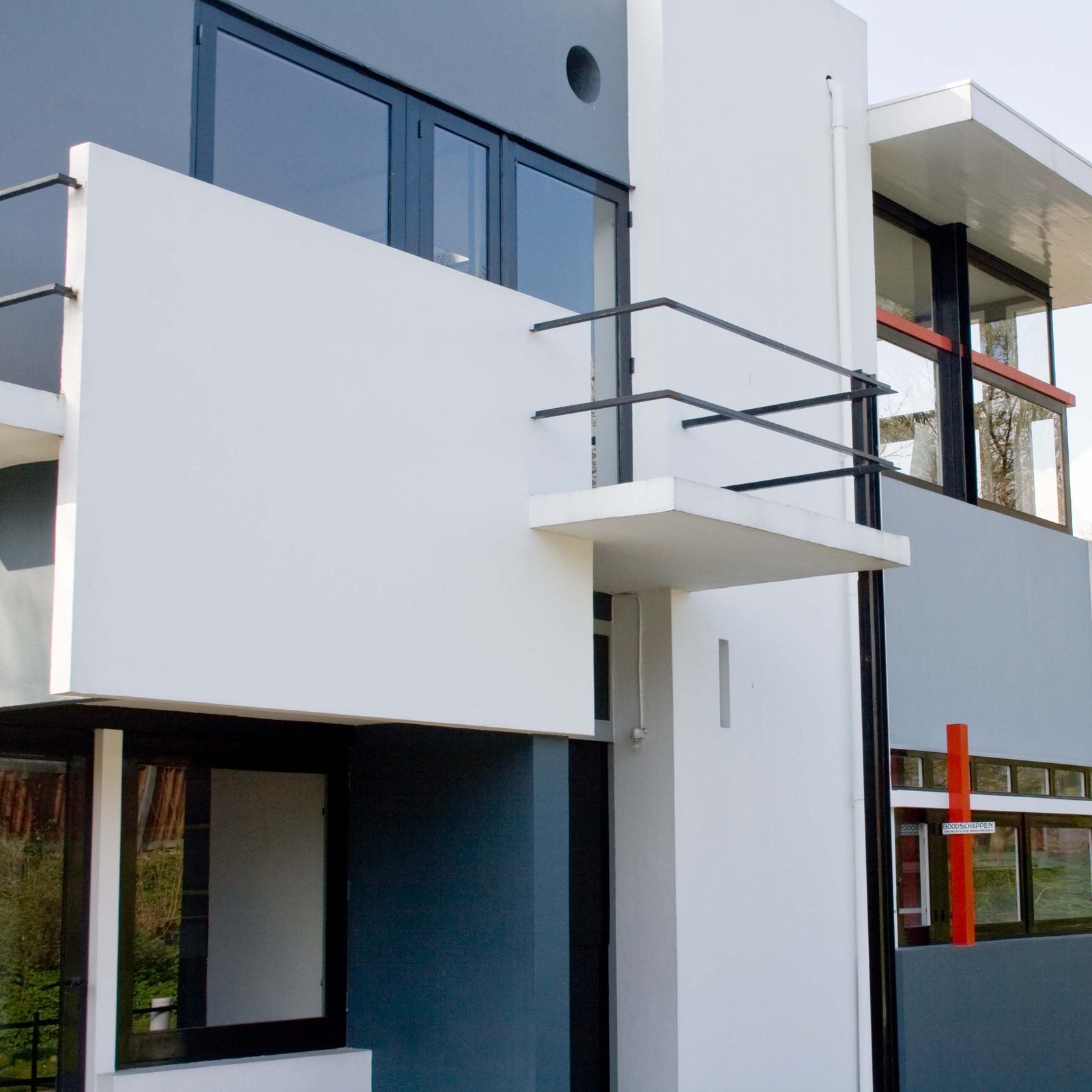
Flexible living is often marketed today as if it were a new invention, usually accompanied by clever furniture and too much optimism about small rooms. The Rietveld Schroder House makes that marketing look late and clumsy. In 1924, Gerrit Thomas Rietveld and Truus Schroder-Schrader produced a house in Utrecht that UNESCO still identifies as an icon of the Modern Movement precisely because of its flexible spatial arrangement. The upper floor can be opened or divided through sliding and rotating panels, the corner windows dissolve the usual boxed-in feel of domestic space, and the whole interior behaves less like a fixed set of rooms than a system that can change character over the course of a day.
The useful corrective is that Truus Schroder should not be treated as a client who merely approved a bold idea. The official house record and UNESCO both make clear that she belongs near the center of the story. Once you recognize that, the building starts to read less like a manifesto dropped onto a site and more like an argument about how a modern life might actually be lived. Even the setting sharpens that point. In 1924 the house stood on the edge of Utrecht looking toward an open polder landscape, and when development threatened that condition in the early 1930s, Schroder bought the land opposite and worked with Rietveld on the blocks that became Erasmuslaan. That is a remarkably practical kind of authorship: not only designing the house, but actively defending the conditions that made the house legible.
This is why the project still feels contemporary a century later. Its fame is not only about De Stijl colors or diagrammatic lines. It comes from a more durable question: how can a small house remain disciplined without becoming rigid? The Rietveld Schroder House answers by making adaptability architectural rather than decorative. If you are asking who designed it, why it matters, or why it became a UNESCO World Heritage Site in 2000, all three answers converge on the same point. The house did not just represent flexible living. It built it.
Wikimedia Commons (ver arquivo original).