Oak Park is where Frank Lloyd Wright tested ideas that changed domestic architecture, and this week's Wright Plus tours show why the interiors matter as much as the facades.
Matheus Rudo Oliveira · 2026-11-02
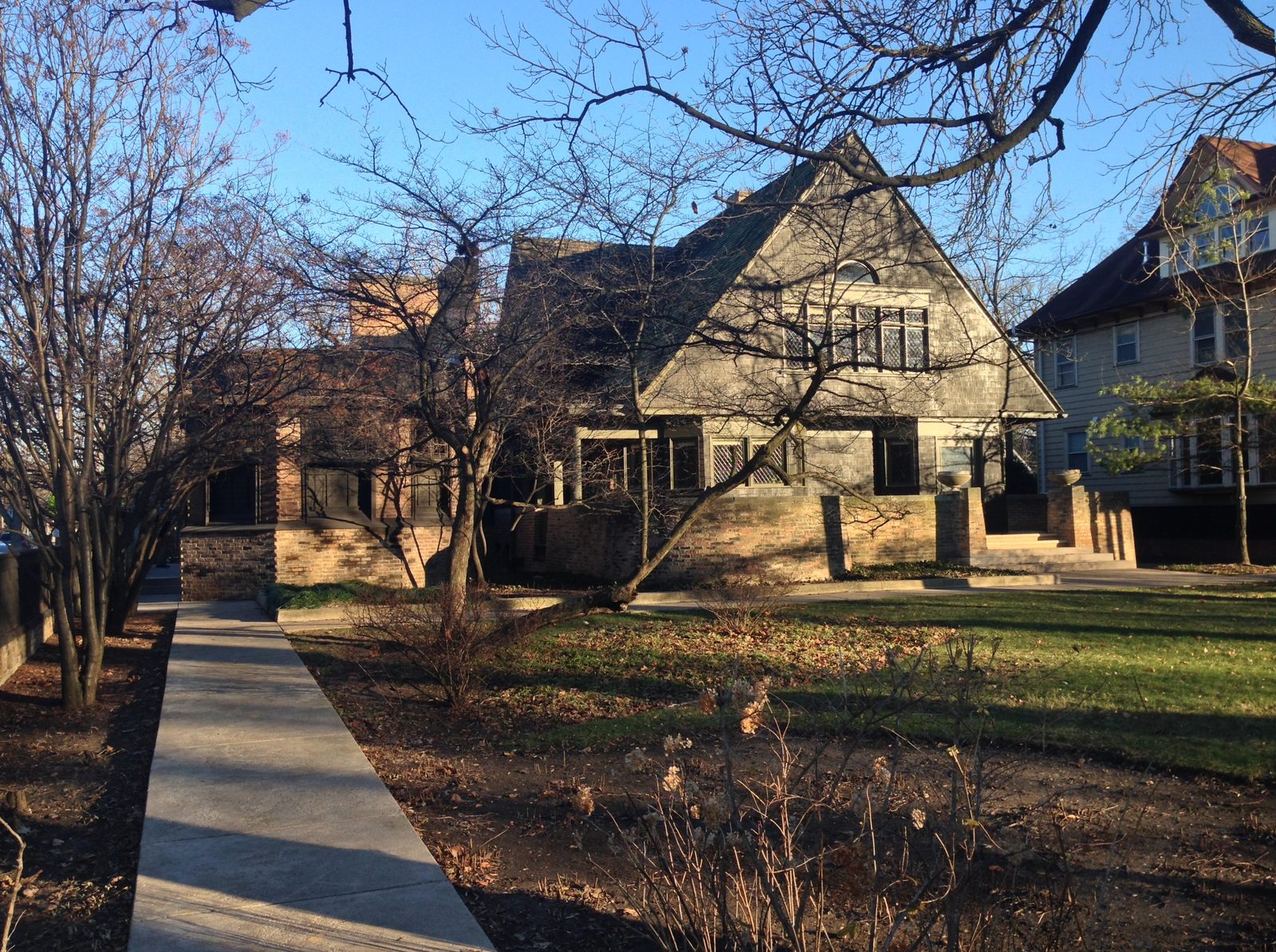
Frank Lloyd Wright's Oak Park houses are easy to flatten into a greatest-hits slideshow: low roofs, long lines, art glass, famous addresses. That is exactly why Oak Park is better understood on foot than on screen. The Frank Lloyd Wright Trust describes the Home and Studio as the birthplace of an architectural revolution, and the broader district still contains the greatest concentration of Wright-designed residences in the world. The point is not just quantity. It is that Oak Park lets you watch an architect learning how domestic space might move, compress, widen, and release before those ideas hardened into textbook phrases about the Prairie style.
Photographs are good at recording facades, but they are weak at showing what Wright was actually doing to bodies in motion. In Oak Park, the interesting experience often begins with the thresholds: low entries that make the next room feel wider, controlled views that do not give everything away at once, hearth-centered rooms that anchor family life without turning static, and art glass that filters light as much as it decorates it. That is why annual programs like Wright Plus matter even when you are not there on the specific day. The value of house access is not celebrity proximity. It is the chance to see private interiors where the spatial argument becomes undeniable. The Heurtley House remains one of the clearest examples because it flips so much of the ordinary suburban script, becoming more expansive inside than the street would suggest.
Oak Park still feels contemporary because so many current housing conversations circle back to problems Wright was already testing there: privacy without isolation, openness without vagueness, and a stronger relationship between rooms and landscape. If you are wondering why these houses matter beyond historical fame, the answer is that they teach you to stop confusing architecture with images of architecture. Oak Park is where Wright's early houses still show what the camera usually misses: not just how they look, but how they think.
Wikimedia Commons (ver arquivo original).