Louis Kahn's Exeter Library still feels unforgettable because the famous central void is only half the story. The real trick is how books, light, and study spaces are pushed to the edges.
Matheus Rudo Oliveira · 2026-11-02
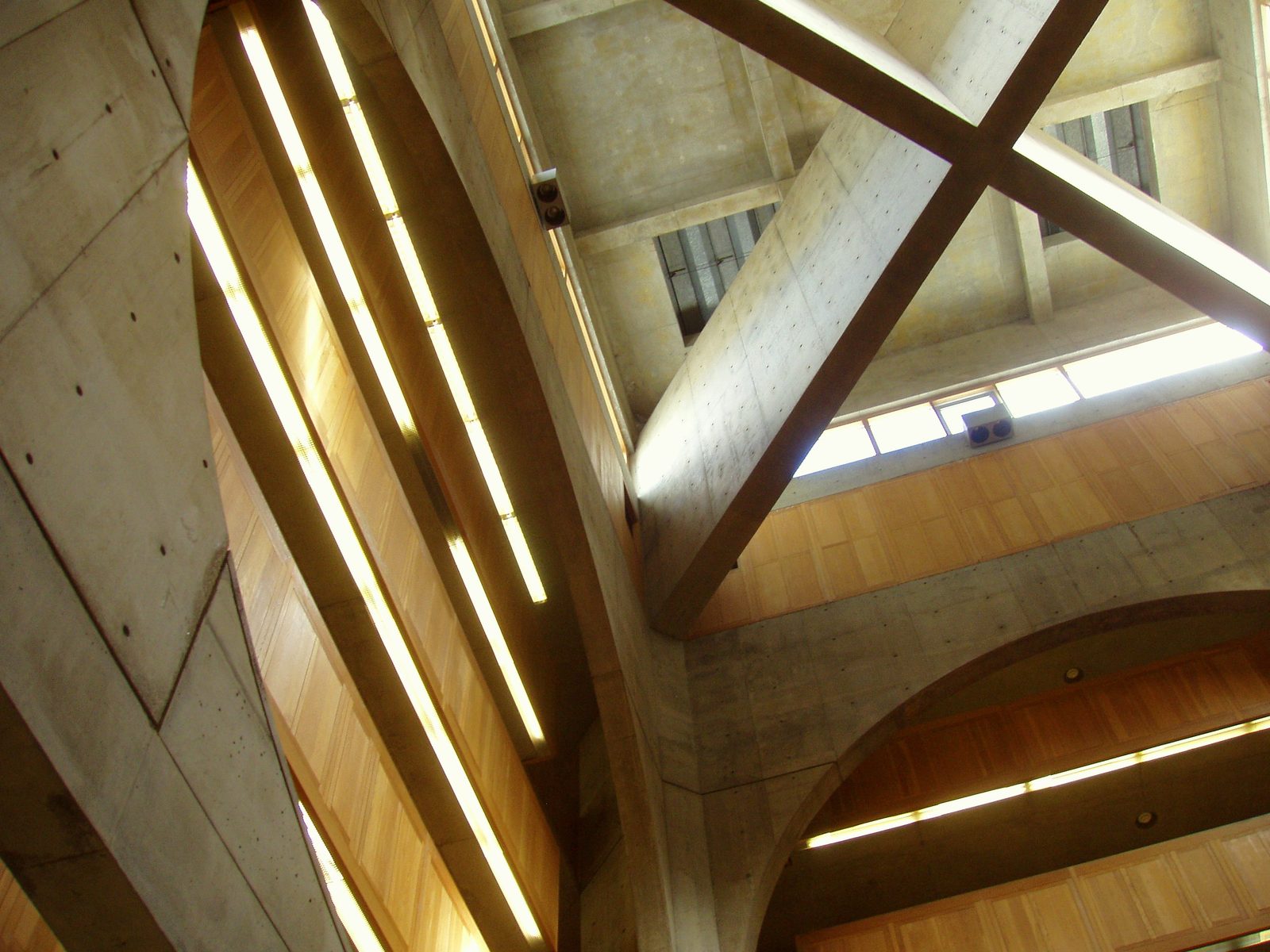
Some famous buildings are understood in one glance. Exeter Library is not one of them. The exterior is memorable, but the building only starts to make sense when you understand how Louis Kahn arranged readers, books, and light. That is why it is a strong topic on Sunday, July 19, 2026: Phillips Exeter Academy still lists advanced-registration visitor days for later this year, and the official sources explain a design move that many photos flatten. Kahn did not put the experience of reading in the middle. He made the middle monumental, then pushed the books and the quietest study spaces toward the perimeter.
According to Phillips Exeter Academy, Kahn was commissioned in 1965 to design a library meant to be more than storage. The brief emphasized readers, study, and reflection, not just shelving. The building opened into use on November 16, 1971, when students physically carried books from the old Davis Library into the new one. That origin story matters because the plan still reads like a diagram of how reading should happen.
Why the center is empty on purpose
The official Exeter pages describe the Class of 1945 Library as the largest secondary school library in the world, with about 380,000 print and electronic volumes, nine levels of print stacks, and 210 study carrels. Those numbers are impressive, but the more interesting fact is spatial: the building's huge central hall is not where the real reading happens.
Exeter's own architecture coverage explains the sequence clearly. You enter a dramatic central volume, orient yourself, and then move outward to the edges where daylight and carrels support focused reading. In other words, the void is not wasted space. It is a civic room that helps the library feel legible before it feels private.
Why Kahn put the books at the perimeter
The simplest way to explain Exeter Library is this: Kahn separated monumentality from study without breaking the building into unrelated parts. The center gives you scale and orientation. The outer ring gives you shelves, windows, and concentration.
That is why the title hook is not just clickworthy. It is structurally true. Books are not treated as a decorative backdrop to an atrium. They are placed where readers can move from stack to seat with almost no friction. Exeter's own commentary on the building keeps returning to that sequence of movement: enter, find, withdraw, read.
Why the materials make the idea feel warmer than it sounds
The official design page also explains why the library never feels abstract in the cold, diagrammatic way that some monumental modern buildings do. Kahn and the faculty committee stayed with traditional Exeter brick, and the completed building uses large quantities of brick, travertine, teak, white oak, and concrete. Exeter notes that the library includes 420,000 exterior face bricks and 300,000 interior face bricks, while white oak shapes the study areas and teak was used on exterior woodwork.
Those facts matter because they explain the emotional effect. The building is strict, but not brittle. The concrete structure gives it weight. The brick gives it warmth. The wood at the carrels keeps the perimeter from feeling like leftover edge space.
Why this still has travel and search value in 2026
As of July 19, 2026, Exeter's official visitor information says drop-in visits are not allowed. Instead, the library hosts self-guided Visitor Days with advance registration. The 2026 public schedule still lists remaining dates in August, October, November, and December, including August 7-27, 2026 on multiple weekdays. That makes the post useful beyond design history because it answers the real question readers often have after seeing the building online: can you actually visit it?
That current access hook helps, but the deeper reason Exeter Library keeps performing is evergreen. It solves a problem many libraries and even digital workplaces still face: how do you make a shared knowledge space feel both public and intensely personal? Kahn's answer was not more openness everywhere. It was a controlled progression from communal center to quiet edge.
FAQ
What is Exeter Library?
Exeter Library is the Class of 1945 Library at Phillips Exeter Academy in New Hampshire, designed by Louis I. Kahn and completed in 1971.
Why is Exeter Library important?
It is important because Kahn turned a library into a sequence: a monumental central hall for orientation and shared presence, with stacks and study spaces arranged so readers can move to the perimeter for light and concentration.
Can you visit Exeter Library in 2026?
Yes, but not as a drop-in visitor. As of July 19, 2026, Phillips Exeter Academy says visits require advance registration through scheduled Visitor Days.
How many study carrels does Exeter Library have?
Phillips Exeter Academy says the library has 210 study carrels.
Final thought: Exeter Library still feels fresh because Kahn did not confuse spectacle with use. He made the center unforgettable, then made the edges where reading actually happens.
Sources Checked:
- https://exeter.edu/about/our-campus/facilities/class-of-1945-library/
- https://library.exeter.edu/Visiting
- https://library.exeter.edu/c.php?g=1464950&p=11004573
- https://exeter.edu/library-design/
- https://library.exeter.edu/kahn
- https://exeter.edu/a-beacon-for-exeter/
- https://commons.wikimedia.org/wiki/File:Phillips_Exeter_-_library_4.JPG
- https://commons.wikimedia.org/wiki/Special:FilePath/Phillips_Exeter_-_library_4.JPG


Image Download Links:
- https://commons.wikimedia.org/wiki/File:Phillips_Exeter_-_library_4.JPG
- https://commons.wikimedia.org/wiki/Special:FilePath/Phillips_Exeter_-_library_4.JPG
- images/featured-image.jpg
Internal Link Suggestions:
- Link to the existing Rudo Studios post on Louis Kahn's Kimbell Art Museum with anchor text like
another Kahn building where structure and atmosphere become the same argument - Link to the existing Rudo Studios post on Louis Kahn's Salk Institute with anchor text like
a different Kahn project where a central void organizes how people think and move
Wikimedia Commons (ver arquivo original).