The Eames House still feels alive because Charles and Ray Eames designed it as a flexible experiment in light, landscape, and everyday work.
Matheus Rudo Oliveira · 2026-11-02
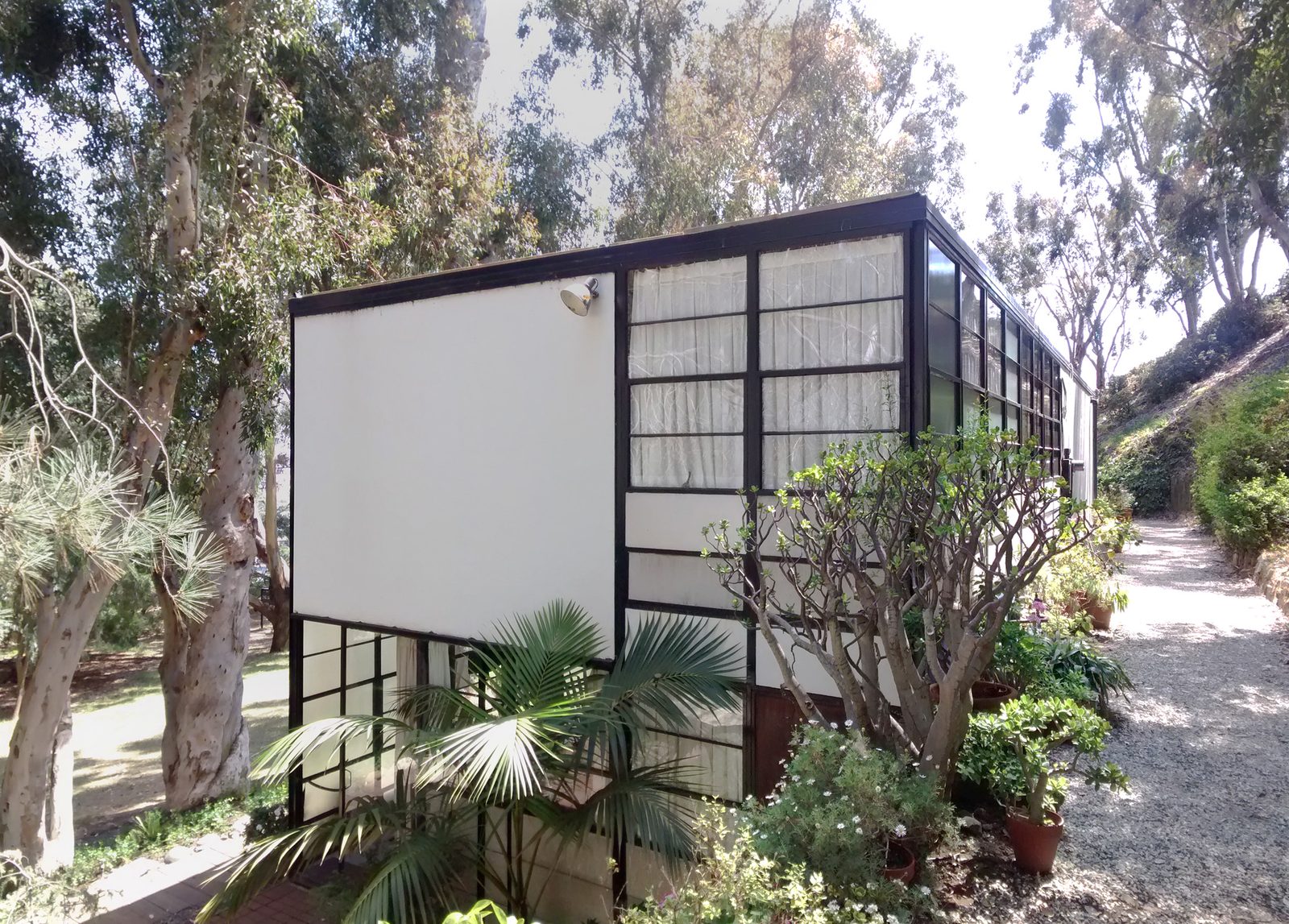
The Eames House remains one of the few famous modern houses that still feels like it might change tomorrow. Not because it is incomplete, but because Charles and Ray Eames never treated architecture as a frozen statement. Completed in 1949 and occupied by them from Christmas Eve of that year onward, the house still reads like an active framework for living and working rather than a polished monument to itself. That is why the phrase Case Study House No. 8 only gets you part of the way there. The building is canonical, but it keeps the temperament of an experiment.
One of its best verified stories explains why. The first 1945 scheme, developed with Eero Saarinen, was the more dramatic Bridge House proposal. Postwar steel shortages delayed construction, and during that delay Charles and Ray fell in love with the meadow on the site. The redesign preserved that meadow and reorganized the house so that standard industrial components could still create generous interior volume without crushing the landscape that had changed their minds. That is an unusually good architectural anecdote because it is not just charming. It explains the building's ethics. The final house exists because the designers revised the concept in favor of the site.
That is also why the interior never feels austere despite the exposed structure and strict grid. The Eames House is full of collections, color, work surfaces, and changing light, which means it behaves less like a shrine to minimalism than a very precise container for ordinary curiosity. If you are wondering who designed it, when it was built, or why people keep calling it a prototype, the answer is not only that it tested prefabricated modern living. It is that the testing never quite stopped. The house still feels alive because revision is built into its story.
Wikimedia Commons (ver arquivo original).