Casa Vicens matters because it shows Gaudi before the legend hardened: testing color, ventilation, craft, and nature in a house that still feels alive.
Matheus Rudo Oliveira · 2026-11-02
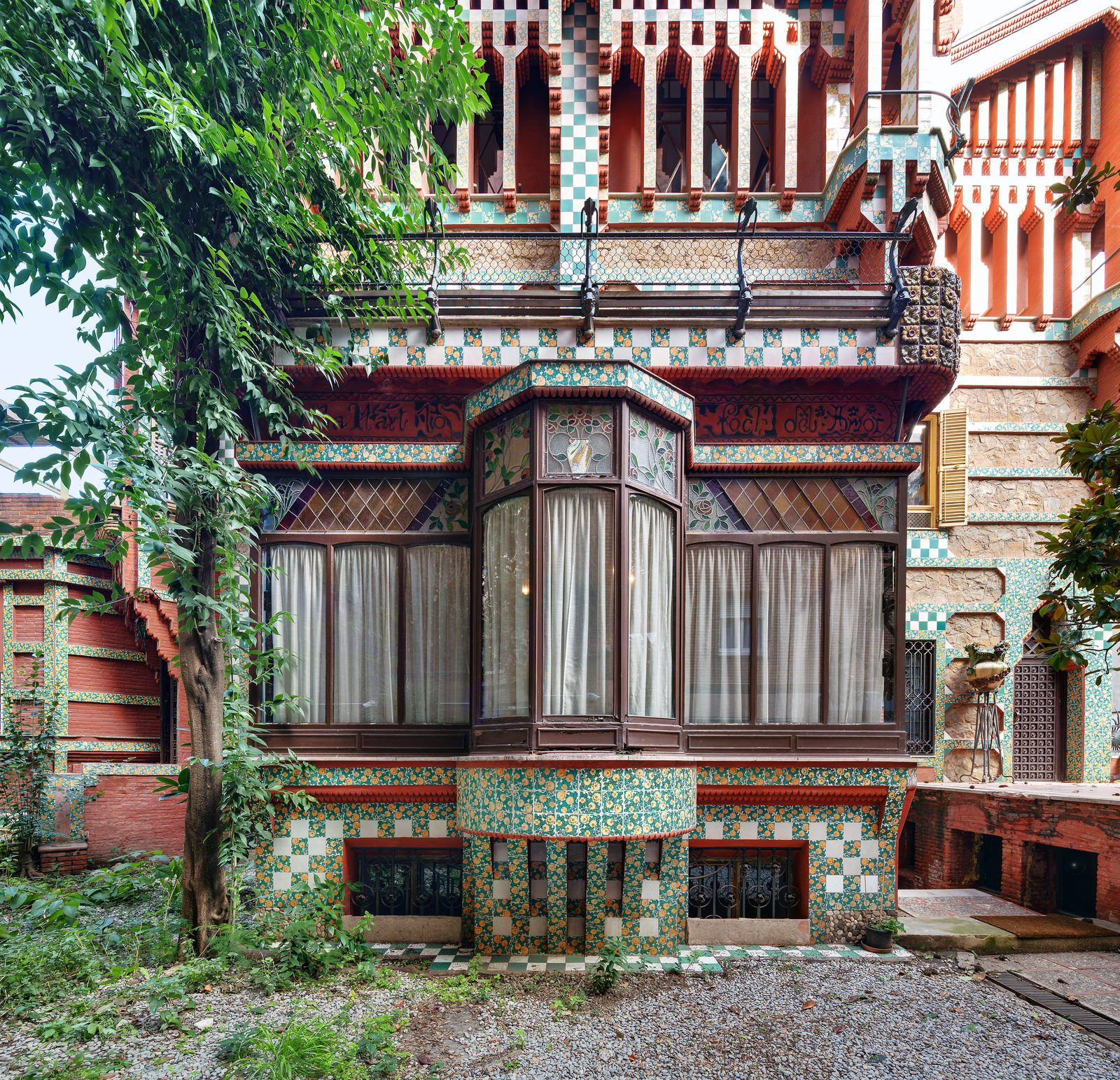
People often talk about Casa Vicens as a prelude, as if its real value were simply that Antoni Gaudi would later become Antoni Gaudi. That misses what makes the building so rewarding. Casa Vicens still feels fresh because it does not read like a polished signature move. It reads like a gifted architect discovering, in public, how far a house can go when color, climate, craft, and ornament are treated as one problem.
Why it feels more experimental than finished
The house was built between 1883 and 1885 as the Vicens family's summer home, and the museum describes it as Gaudi's first house and first major commission. On the official history page, Casa Vicens is presented as a first masterpiece and a prelude to his later work, but what matters for a reader now is how many ideas are already being tested at once. Gaudi wrote that a house should maximize light and ventilation while also shaping the character of family life. Casa Vicens does exactly that. It is not just picturesque. It is an argument about what a modern home could feel like before modernism had its usual language.
Nature here is structure, not wallpaper
The building is famous for its ceramic skin, but the best detail is where those motifs came from. Casa Vicens explains that when Gaudi measured the site, he noticed small yellow flowers and a palm tree, then translated those discoveries into the ceramic cladding and the iron entrance grille. That move is easy to underestimate. He was not decorating the house after the fact; he was letting the site supply the house's visual logic.
That is why Casa Vicens still avoids the dead-museum feeling some early landmarks acquire. The official history also notes that the main facade opened onto a large garden and that the orientation helped keep the summer residence cool. Even before visitors admire the tiles, they are looking at a building shaped by shade, air, and seasonal use. The ornament is vivid, but it is tied to how the house lives.
Why July 1, 2026 is a smart day to revisit it
There is also a good reason to write about Casa Vicens right now. The UIA World Congress of Architects is taking place in Barcelona from June 28 to July 2, 2026, putting the city back at the center of a global architecture conversation. At the same time, Casa Vicens's activities page lists July programming at the house, including a July 2 family workshop and repeated dates through the rest of the month. That makes this more than an evergreen history subject today. It is a live travel and architecture-search opportunity.
The deeper reason endures beyond the calendar. UNESCO's Works of Antoni Gaudi listing treats Casa Vicens as part of a body of work that changed architecture's formal language, yet the house still feels intimate rather than monumental. You can see the future Gaudi here, but you can also see something rarer: uncertainty used productively. The house keeps its energy because it still feels like invention in motion.
FAQ
What is Casa Vicens?
Casa Vicens is Gaudi's first house and first major commission, built in Barcelona between 1883 and 1885 as a summer home for the Vicens family.
Why is Casa Vicens important?
It matters because it shows early Gaudi joining light, ventilation, craft, ceramics, and site-specific motifs into one architectural idea, rather than treating decoration as something separate.
Can you visit Casa Vicens today?
Yes. Casa Vicens operates as a house-museum open to the public, and its official site lists current visits, tickets, and activities.
Final thought: Casa Vicens lasts because it is not a rough draft of greatness. It is the moment when Gaudi proved that a house could behave like climate, garden, and artwork all at once.
Sources Checked:
- https://casavicens.org/about-us
- https://casavicens.org/the-house/history
- https://casavicens.org/the-house/history/gaudi-original-project-1883-1885
- https://casavicens.org/activities
- https://www.uia-architectes.org/en/events/world-congresses-of-architects/barcelona-2026/
- https://whc.unesco.org/en/list/320/
- https://whc.unesco.org/document/153189
- https://commons.wikimedia.org/wiki/File:Casa_Vicens_2014_ext_003.jpg

Image Download Links:
- https://commons.wikimedia.org/wiki/File:Casa_Vicens_2014_ext_003.jpg
- images/featured-image.jpg
Internal Link Suggestions:
- Link to the existing Rudo Studios post on Casa Batllo with anchor text like
another Gaudi project where surface and structure become inseparable - Link to the existing Rudo Studios post on Barcelona Pavilion with anchor text like
a very different Barcelona icon that also proves how little architecture needs to do to feel complete
Wikimedia Commons (ver arquivo original).