Casa Barragan feels unforgettable not because the colors shout, but because Luis Barragan made a quiet street, austere facade, and slow sequence do half the work.
Matheus Rudo Oliveira · 2026-11-02
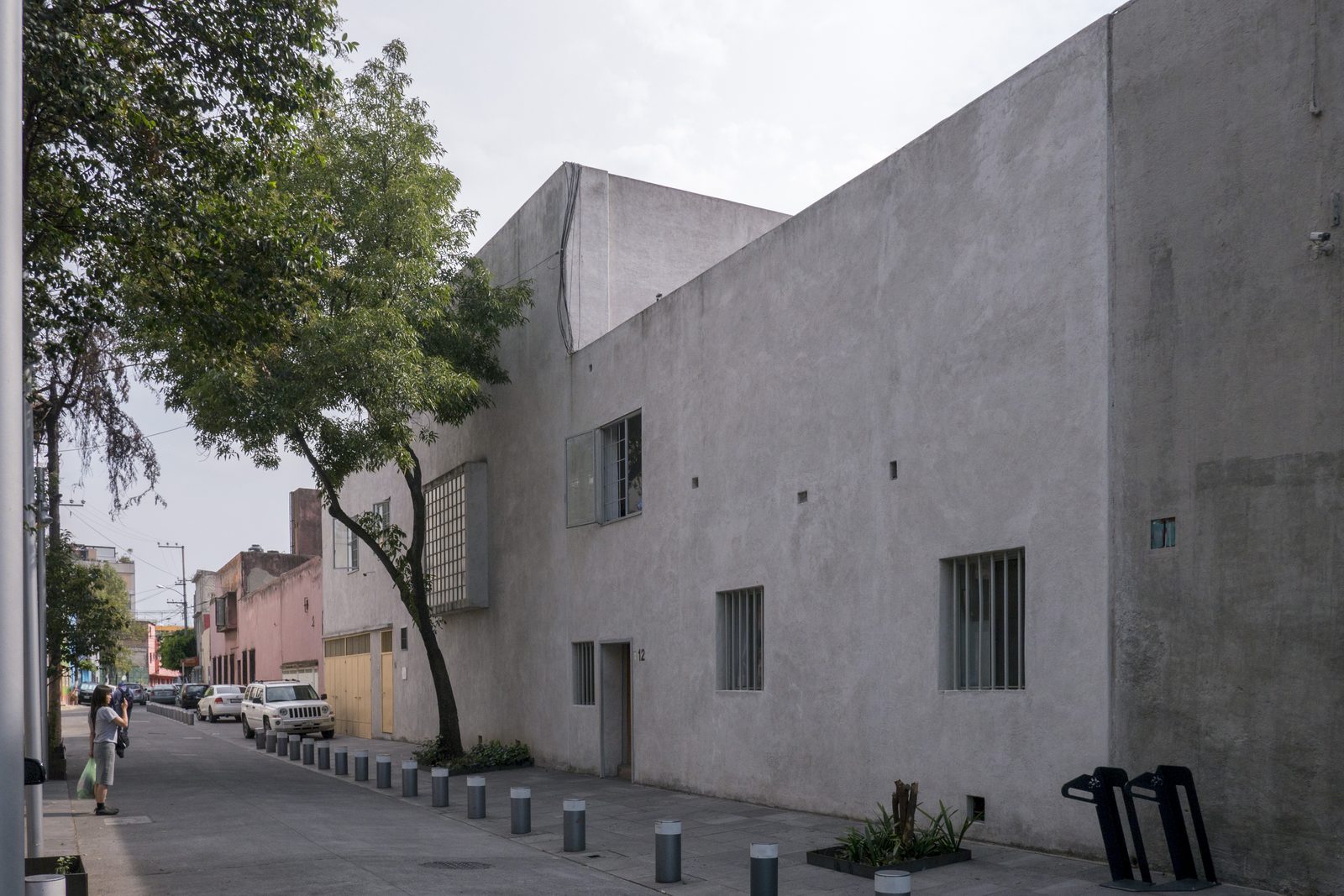
If you only know Casa Barragan from photographs, it is easy to think the lesson is color. The stronger lesson is sequence. As of July 14, 2026, the official house museum still requires advance booking through its website, with admission subject to availability. That fits the architecture: Luis Barragan's house in Mexico City was designed to reveal itself slowly, not all at once.
Built in 1947-1948 and preserved as Barragan's residence and studio until his death in 1988, the house remains one of the clearest places to understand why his work still feels current. The official site identifies it as the only individual property in Latin America on UNESCO's World Heritage List. UNESCO says that here, color is "substantial to form and materials" rather than surface effect.
Why the facade has to stay quiet
Barragan placed the house and workshop on two adjacent lots, numbers 12 and 14, on General Francisco Ramirez Street in Tacubaya, and aligned the facade with the street so it would preserve the scale and character of its neighbors. The museum describes the exterior as austere, almost unfinished, humble, and intentionally anonymous.
That is why the house still lands so hard. The modest setting, plain wall, and controlled openings lower the visual volume before Barragan raises it again inside. The quiet exterior is what allows the interior intensity to feel earned.
Why color feels structural here
UNESCO's wording is useful here. The organization says the house stages a profound dialogue between light and constructed space, and that color is substantial to form and materials. That means color is not simply applied after the architecture is done. It helps define where space feels heavy, where light gathers, and where a wall reads as a plane with emotional weight.
Barragan did not use color to decorate minimalist rooms. He used it to change how mass, shadow, and pause are perceived. In Casa Barragan, restraint and intensity depend on each other.
Why the house works as a sequence, not a postcard
UNESCO describes the house as a personal and unique reflection of its designer, while the museum notes that Barragan lived and worked here until his death and kept modifying it over time. UNESCO even preserves his belief that a house is never finished but remains in constant evolution.
Casa Barragan is powerful because it unfolds step by step: street, boundary, threshold, room, stair, terrace, garden. Barragan did not make a house that gives itself away in one image. The delay is part of the architecture.
Why the garden matters as much as the rooms
Barragan called himself a landscape architect on the Pritzker Prize laureate page, and UNESCO says his work strongly influenced the design of gardens, plazas, and landscapes.
So Casa Barragan is not just a famous interior. It is also a lesson in enclosure, silence, proportion, and carefully staged contact with the outdoors. The Pritzker jury citation praised Barragan for creating gardens, plazas, and fountains of unusual beauty.
Why it still feels current in 2026
The official museum says the house remains one of the most visited sites in Mexico City for architects and art-minded travelers from around the world. The building answers several current anxieties without preaching about them: how to make privacy without deadness, how to use color without noise, and how to build atmosphere without excess.
For readers looking for a travel-worthy modern house that still teaches something concrete, Casa Barragan is a strong answer on July 14, 2026. Barragan shows that architecture can become more intense by saying less in public and more in sequence.
FAQ
What is Casa Barragan?
Casa Barragan is the former residence and studio of Mexican architect Luis Barragan in Mexico City, now preserved as a museum.
Why is Casa Barragan famous?
It is famous for the way it merges modern architecture, traditional influences, light, garden thinking, and color that works as part of spatial form rather than decoration.
Can you visit Casa Barragan in 2026?
Yes. As of July 14, 2026, the official museum says tickets must be booked in advance through its website and are subject to availability.
Is Casa Barragan a UNESCO site?
Yes. Casa Luis Barragan was inscribed on UNESCO's World Heritage List in 2004.
Final thought: Casa Barragan still feels rare because Barragan understood that intensity becomes stronger when architecture refuses to show everything at once.
Sources Checked:
- https://www.casaluisbarragan.org/eng/en_index.html
- https://www.casaluisbarragan.org/eng/en_visitas.html
- https://www.casaluisbarragan.org/eng/en_lacasa.html
- https://www.casaluisbarragan.org/eng/en_luisbarragan.html
- https://whc.unesco.org/en/list/1136/
- https://www.pritzkerprize.com/laureates/1980
- https://www.pritzkerprize.com/jury-citation-luis-barragan
- https://commons.wikimedia.org/wiki/File:Luis_Barrag%C3%A1n_House_and_Studio_Street_view.JPG
- https://commons.wikimedia.org/wiki/Special:FilePath/Luis_Barrag%C3%A1n_House_and_Studio_Street_view.JPG


Image Download Links:
- https://commons.wikimedia.org/wiki/File:Luis_Barrag%C3%A1n_House_and_Studio_Street_view.JPG
- https://commons.wikimedia.org/wiki/Special:FilePath/Luis_Barrag%C3%A1n_House_and_Studio_Street_view.JPG
- images/featured-image.jpg
Internal Link Suggestions:
- Link to the existing Rudo Studios post on Casa de Vidro with anchor text like
another house where calm surfaces hide a much more radical spatial strategy - Link to the existing Rudo Studios post on Casa Vicens with anchor text like
a different case where a famous architect used domestic space as a testing ground
Wikimedia Commons (ver arquivo original).