Le Corbusier's Carpenter Center is famous for being his only North American building, but its real surprise is how it turns circulation itself into the architectural event.
Matheus Rudo Oliveira · 2026-11-02
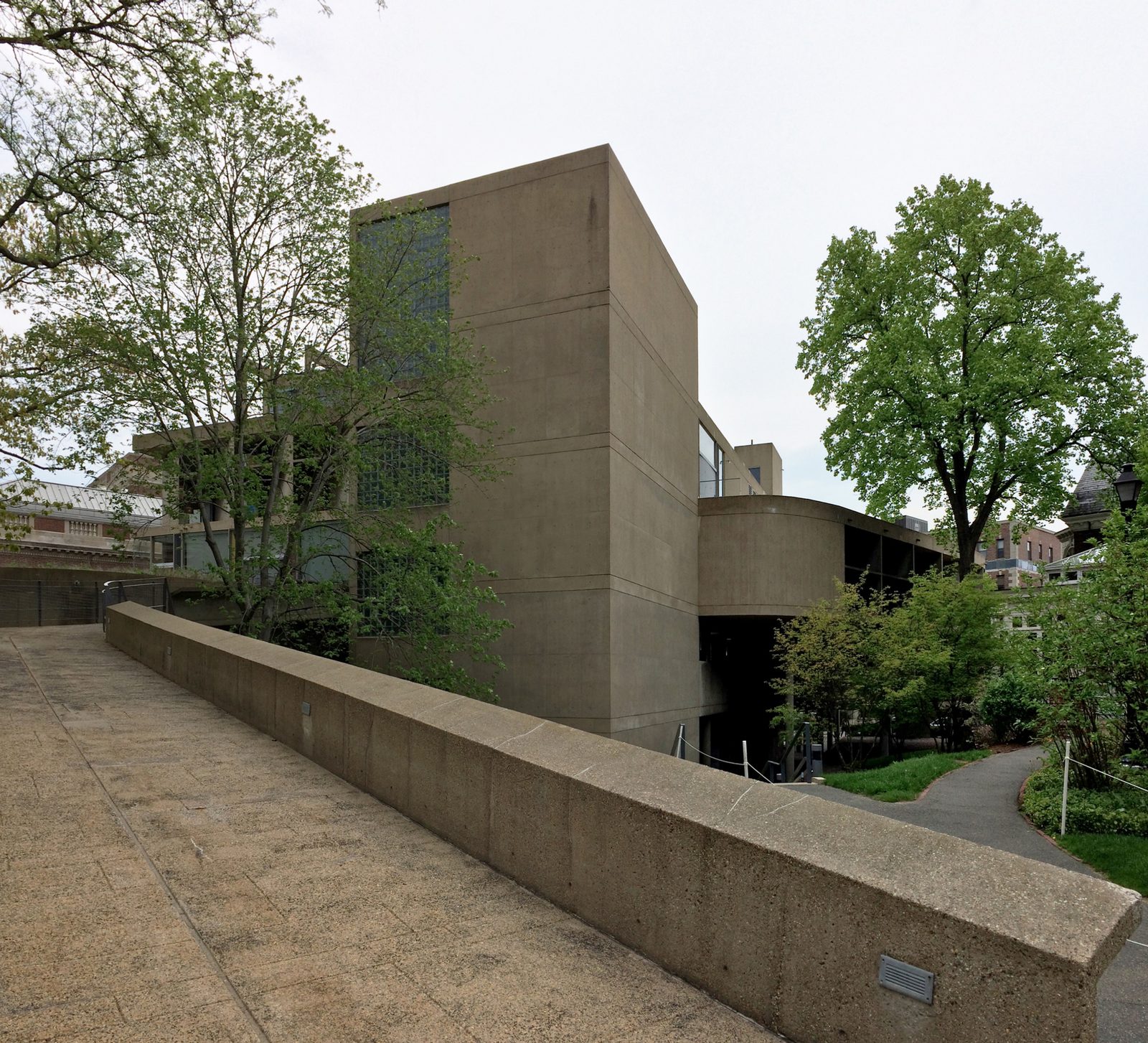
Most famous architecture rewards the person who stops, stands back, and frames the building as an object. The Carpenter Center for the Visual Arts in Cambridge does almost the opposite. Le Corbusier's only building in North America is best understood while moving through it, because the main idea is not just concrete form. It is circulation. The building works by letting people cut through it.
That is why the Carpenter Center still feels sharper than many better-known icons. The official building page explains that the ramp through the heart of the building encourages public circulation and gives views into the studios, making artistic work visible through the architecture itself. In other words, the shortcut is not a convenience added afterward. It is the point.
A public route is the real centerpiece
The strongest verified version of this story comes from the Fondation Le Corbusier, which describes the Carpenter Center as a synthesis of Le Corbusier's architectural principles, including the free plan, pilotis, brise-soleils, different kinds of glazing, and two ramps connecting the building to the street. It also notes that the architectural promenade lets the building fit into its surroundings by linking Quincy Street and Prescott Street to the footpaths that cross Harvard Yard.
That reading matters because it shifts attention away from the usual "only Le Corbusier building in America" headline. That fact is true, and both the Carpenter Center and the Fondation state it plainly. But the more curious lesson is that Le Corbusier used his one North American commission to make a visual-arts building behave like a piece of campus infrastructure. It is a destination, but also a route.
Why the building still feels unusually open
The Carpenter Center page says the five levels function as flexible spaces for painting, photography, drawing, mixed media, and sculpture. The public ramp and visible studios make the creative process part of the visitor experience instead of hiding it behind institutional walls. That idea was already present in the project's early ambition. The Fondation notes that Le Corbusier embraced the commission when he understood it as a meeting place for younger generations experimenting with the visual arts.
This is also why the building's concrete image can be misleading. From photos alone, the Carpenter Center can read as a compact late-modern object. In person, or even in plan, it is more generous than severe. The ramp slows you down, changes your angle of view, and lets the building reveal itself in segments. The form is not there to impress from one perfect position. It is there to choreograph passage.
Why it is a strong architecture stop right now
As of July 4, 2026, the Center is officially open Thursday through Sunday from 12 PM to 5 PM, free to the public. Its Spring 2026 architecture tours also showed that Harvard is actively framing the building itself as a public draw, with guided tours focused on its layered history and structural features. Even when those specific spring dates have passed, the current public-access pattern makes the building highly relevant in summer travel planning.
The Carpenter Center endures because it corrects a common misunderstanding about modernism. The best modern buildings are not only clean images. They are systems for movement, light, and encounter. At Harvard, Le Corbusier made that lesson literal: if you understand why people are meant to pass through this building, you understand why it still matters.
FAQ
Why is the Carpenter Center important?
It is important because it is Le Corbusier's only building in North America and because its ramps turn public circulation into the core architectural idea rather than a secondary function.
Can you visit the Carpenter Center?
Yes. The Carpenter Center's official visit page says it is free and open to the public Thursday through Sunday, 12 PM to 5 PM, with some interior areas and exterior spaces accessible to visitors.
What makes the Carpenter Center different from other modernist landmarks?
Its most distinctive feature is that the building doubles as a passage across campus, using ramps, views into studios, and an architectural promenade to make movement part of the design.
Final thought: The Carpenter Center stays memorable because Le Corbusier did not only design a place to look at art. He designed a building that teaches architecture through the act of passing through it.
Sources Checked:
- https://carpenter.center/building
- https://carpenter.center/visit
- https://carpenter.center/programs/spring-2026-architecture-tours-of-the-carpenter-center
- https://www.fondationlecorbusier.fr/en/work-architecture/achievements-carpenter-center-for-the-visual-arts-cambridge-mass-u-s-a-1959-1969/
- https://commons.wikimedia.org/wiki/File:Carpenter-Center-for-Visual-Arts-Quincy-St-Cambridge-MA-05-2018.jpg

Image Download Links:
- https://commons.wikimedia.org/wiki/File:Carpenter-Center-for-Visual-Arts-Quincy-St-Cambridge-MA-05-2018.jpg
- https://upload.wikimedia.org/wikipedia/commons/0/0b/Carpenter-Center-for-Visual-Arts-Quincy-St-Cambridge-MA-05-2018.jpg
- images/featured-image.jpg

Internal Link Suggestions:
- Link to the existing Rudo Studios post on Le Corbusier's Chandigarh with anchor text like
another Le Corbusier work where circulation and civic movement shape the whole experience - Link to the existing Rudo Studios post on the Barcelona Pavilion with anchor text like
another modernist icon best understood as a sequence of movement rather than a static object
Wikimedia Commons (ver arquivo original).