Blenheim Palace still overwhelms visitors because John Vanbrugh designed it less like a polite country house and more like a national stage set for power, procession, and spectacle.
Matheus Rudo Oliveira · 2026-11-02
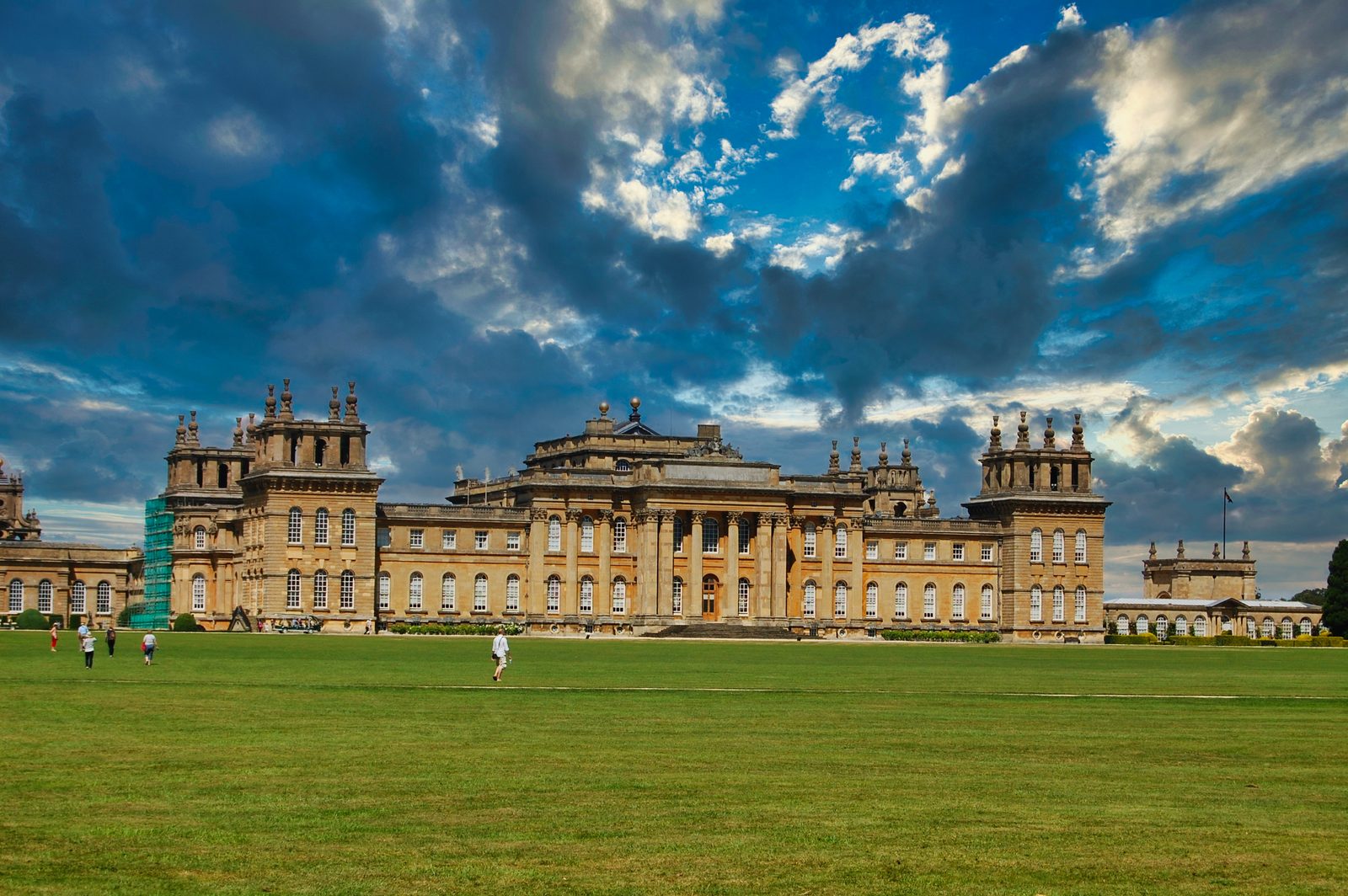
Blenheim Palace: Why Vanbrugh Made Power Feel Like Theater
Some buildings impress you because they are elegant. Blenheim Palace is different. It arrives with weight, distance, choreography, and a kind of controlled excess that still feels startling three centuries later.
That reaction is not accidental. According to the UNESCO World Heritage entry, Blenheim Palace was built between 1705 and 1722 as a national gift to John Churchill, 1st Duke of Marlborough, after the 1704 Battle of Blenheim. The point was never just to provide a comfortable home. It was to make victory visible.
That is why Blenheim still matters in 2026. During this tercentenary year of Sir John Vanbrugh's death, the Vanbrugh300 program and the Sir John Soane's Museum exhibition Vanbrugh: The Drama of Architecture have pushed his work back into public view. And Blenheim is the clearest place to see what made him unusual: he understood that architecture could behave like stagecraft without becoming superficial.
Blenheim Was Designed as a National Performance
UNESCO describes Blenheim as a perfect example of an 18th-century princely dwelling, but that phrase can sound calmer than the building actually is. The Historic England listing is more revealing. It describes the palace as a Baroque country house by Sir John Vanbrugh and Nicholas Hawksmoor, organized around a Great Court and flanked by major service courts.
That composition matters because it controls how you arrive. Blenheim does not reveal itself as a compact domestic object. It builds expectation through sequence. Courts, towers, depth, and mass keep delaying the moment when the building reads as a complete whole.
This is where the theatrical comparison becomes useful. Theater is not only about ornament or costume. It is also about timing, movement, and the management of attention. Blenheim does all three.
Why It Feels More Like a Monument Than a House
Historic England preserves one of the sharpest descriptions of Vanbrugh's intent: Blenheim was conceived as a "Royall and a National Monument." That phrase explains a great deal.
The palace does contain domestic rooms, of course, but the emotional center of the design lies elsewhere. The point is magnificence before comfort, symbolic weight before intimacy. Even UNESCO frames the site as both architecture and landscape working together to express national prestige.
If you look at the building through that lens, details that might otherwise seem excessive start making sense. The corner towers, the heavy limestone massing, the Great Court, and the long processional approaches all insist that arrival should feel ceremonial. The architecture is trying to put the visitor in a particular psychological position: smaller than the institution, smaller than the patron, smaller than the event being commemorated.
That is not subtle architecture. It is persuasive architecture.
Vanbrugh's Drama Was Architectural, Not Merely Decorative
There is a lazy way to talk about Baroque buildings that reduces them to ornament and grandeur. Vanbrugh deserves a better reading than that.
The Sir John Soane's Museum exhibition page argues that Vanbrugh's buildings are defined by their emotional impact and by his dramatic use of light and shadow, recessions and projections. The Vanbrugh300 overview makes the same point, describing his ability to exploit architecture emotionally rather than simply decorate it.
That distinction is crucial at Blenheim. The palace feels theatrical because the drama is embedded in form:
- the deep setbacks and advancing masses create shifting shadow
- the courts and gateways turn movement into a sequence
- the building's scale keeps resetting your sense of proportion
- the park and palace read together as one extended scene
This is also why Blenheim still photographs so well. It was made for perspective. Different angles do not flatten it into one image; they keep changing the plot.
The Landscape Makes the Building Even More Stage-Like
Blenheim's effect does not stop at the walls. UNESCO notes that the palace sits within a large walled park later overlaid by the designs of Lancelot "Capability" Brown from 1761 onward. That later landscape intervention matters because it amplifies Vanbrugh's architecture rather than softening it into mere scenery.
The official Blenheim history around Vanbrugh and the building emphasizes that the palace was intended as a monumental symbol from the start, and UNESCO calls the wider setting one of the great examples of naturalistic landscape design. In practice, that means the experience of Blenheim is never only facade-deep. Water, distance, and framed approach keep extending the drama outward.
This is one reason Blenheim remains more memorable than many equally expensive country houses. You do not simply inspect it. You move through an argument about power.
Why Blenheim Is a Strong Travel-Worthy Building in 2026
The obvious reason to care is historical. The better reason is experiential.
As checked on Thursday, July 30, 2026, the official Blenheim opening page indicates that the Palace State Rooms and Gardens are open daily, with the park also open daily. That matters because Blenheim is not an abstract case study. It is still visitable as architecture, landscape, and procession rather than just as a famous image online.
It is also newly legible this year because Vanbrugh is receiving unusual public attention. The Vanbrugh300 festival is a year-long 2026 program across six major houses, while the Blenheim-focused Blueprints of Power page shows how much current interpretation is centered on his ambition, rivalries, and creative vision. Even if some of the early-year exhibitions have already closed by late July 2026, the broader cultural reappraisal is still active.
For readers who like architecture that teaches through direct experience, that makes Blenheim unusually timely.
Three Design Lessons Hidden in the Spectacle
1. Sequence can matter more than facade
Blenheim is not powerful because of a single postcard view. It is powerful because approach, enclosure, and release are designed as a chain of experiences.
2. Monumentality works best when it has structure
The building's scale would be exhausting if it were random. Instead, courts, towers, and major axes give the mass a legible order.
3. Architecture can be emotional without becoming vague
Vanbrugh's drama is built from concrete tools: shadow, projection, procession, and measured distance. The feeling comes from the geometry.
FAQ
What is Blenheim Palace?
Blenheim Palace is a monumental country house in Oxfordshire, England, designed by John Vanbrugh with Nicholas Hawksmoor and built in the early 18th century for the Dukes of Marlborough.
Why is Blenheim Palace famous?
It is famous for its English Baroque architecture, its association with John Churchill and Winston Churchill, and its status as a UNESCO World Heritage Site.
Why does Blenheim Palace feel theatrical?
Because Vanbrugh used courts, towers, massing, deep shadow, and long approaches to turn arrival into a dramatic sequence rather than a simple domestic entrance.
Can you visit Blenheim Palace?
Yes. As checked on July 30, 2026, Blenheim's official visitor information indicates that the palace, gardens, and park are open daily, though hours can change and tickets should be checked on the official site before visiting.
Final Thought
Blenheim Palace lasts in the imagination because it does not pretend that architecture is neutral. Vanbrugh used scale, sequence, and shadow to turn political prestige into a physical experience. Whether you admire that ambition or distrust it, the building still proves the same point: power feels strongest when architecture knows how to stage it.
Internal Link Suggestions
- Sir John Soane's Museum: Why One House Still Teaches Architects How to Collect Light
- Carpenter Center: Why Le Corbusier Turned a Building Into a Shortcut
- Milwaukee Art Museum: Why Calatrava Made Arrival Feel Like the Main Event
Sources Checked
- https://whc.unesco.org/en/list/425/
- https://historicengland.org.uk/listing/the-list/list-entry/1052912
- https://www.soane.org/exhibitions/vanbrugh-drama-architecture
- https://www.vanbrugh300.co.uk/about-vanbrugh300/
- https://www.vanbrugh300.co.uk/exhibition-blueprints-of-power/
- https://www.blenheimpalace.com/stories/blueprints-of-power-john-vanbrugh-and-the-building-of-blenheim-palace.html
- https://www.blenheimpalace.com/visitus/opening-times/
- https://commons.wikimedia.org/wiki/File:Blenheim_Palace_Exterior_%26_Gardens.jpg

Image Download Links
- https://commons.wikimedia.org/wiki/File:Blenheim_Palace_Exterior_%26_Gardens.jpg
- https://commons.wikimedia.org/wiki/Special:FilePath/Blenheim%20Palace%20Exterior%20%26%20Gardens.jpg

Wikimedia Commons (ver arquivo original).