Mies van der Rohe and Lilly Reich's Barcelona Pavilion still feels radical because its "emptiness" is actually a carefully staged lesson in movement, material, and reflection.
Matheus Rudo Oliveira · 2026-11-01
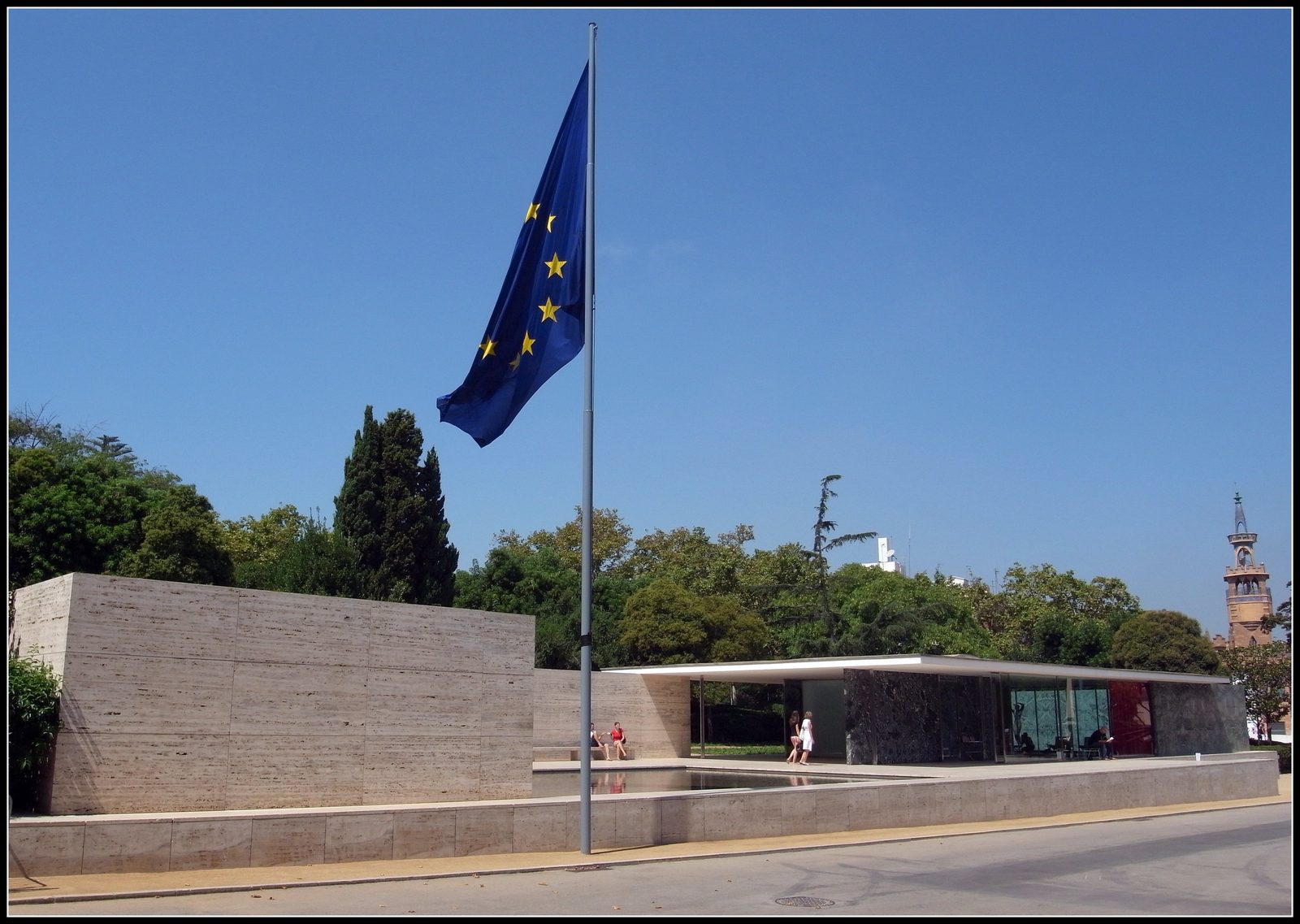
The Barcelona Pavilion has one of the strangest reputations in architecture. Almost everyone calls it minimal, and almost no one who has really paid attention to it means minimal in the ordinary sense of lacking things. The building feels complete because its so-called emptiness is actually crowded with decisions. Designed by Ludwig Mies van der Rohe and Lilly Reich as the German Pavilion for the 1929 Barcelona International Exposition, it was never meant to impress through size or program. It had no conventional domestic clutter, no long list of functions, and no facade trying to tell a moral story. Instead, it asked whether movement, reflection, structure, and material could do nearly all the architectural work by themselves.
That question still feels fresh because the Pavilion never behaves like a normal room. You do not really enter it the way you enter most buildings, and you do not read it frontally for very long. You move around freestanding walls, catch stone and sky in the water, see columns reflected where you thought there was only air, and discover that a single onyx wall can anchor an entire composition more strongly than a bank of enclosed rooms. Even the Barcelona chairs make the point. They are not there to fill space. They are there to prove that one object, placed with enough precision, can make the surrounding emptiness feel even more charged.
Its short original life makes the story even better. The Pavilion was dismantled in 1930, which means one of modern architecture's most influential buildings first survived more in photographs, drawings, and memory than in material reality. That disappearing act is part of why Lilly Reich matters so much here. Once you stop treating the building as a one-man masterpiece, it becomes easier to see how carefully the surfaces, furniture, and spatial sequence were composed together. The Pavilion still defeats the word empty because it was never an exercise in subtraction for its own sake. It was an exercise in concentration, and that is why a visit still feels less like touring a ruin of modernism than stepping into one of its sharpest arguments.
Wikimedia Commons (ver arquivo original).