Casa Batlló becomes one of Barcelona's most photographed façades every April, but the real story behind the roses says a lot about Gaudí, Catalonia, and architectural symbolism.
Matheus Rudo Oliveira · 2026-11-02
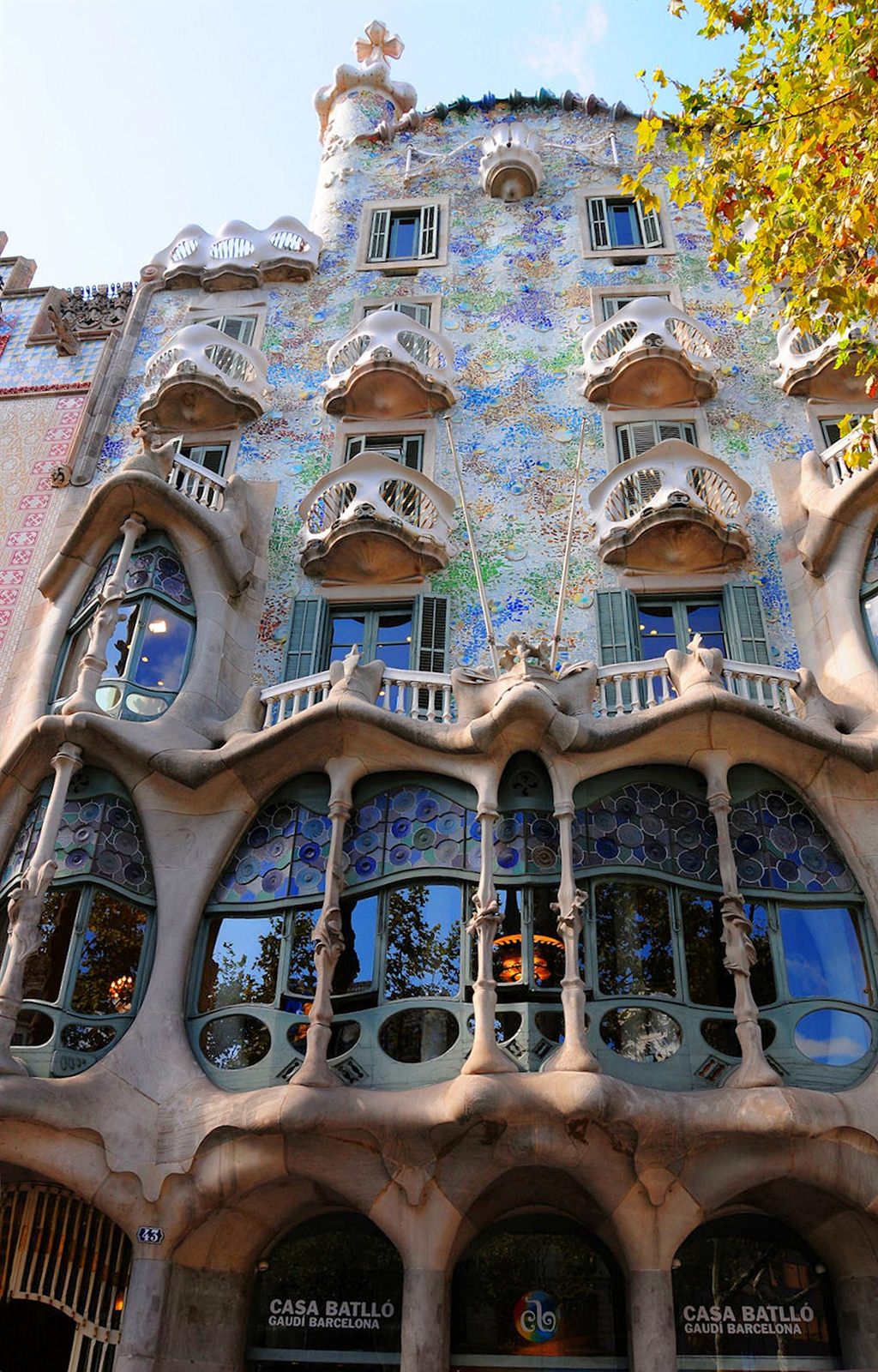
Antoni Gaudí's Casa Batlló: Why Barcelona Covers It in Roses Every April
Every April, Casa Batlló becomes one of the most recognizable images in Barcelona. For Sant Jordi, the façade is dressed in roses, turning Antoni Gaudí's already theatrical building into a citywide symbol of books, love, and Catalan identity. It is easy to treat that image as a marketing gesture. It makes more sense to read it as proof that some buildings remain culturally alive long after they become heritage.
The House Was Already Built Before Gaudí Made It Famous
According to Casa Batlló's official history, the building at 43 Passeig de Gràcia was originally constructed in 1877 by Emili Sala Cortés. Josep Batlló bought it in 1903, and Gaudí persuaded him not to demolish it but to carry out a full renovation between 1904 and 1906. That decision matters because Casa Batlló is not just a new object by a genius architect. It is also a radical remake, which helps explain why it still feels so strange and modern.
Why the Façade Invites So Many Interpretations
Gaudí never left one tidy explanation for the house, and Casa Batlló's own materials lean into that ambiguity. The official façade page describes an exuberant skin of stone, glass, ceramics, recycled materials, and fantasy. It also notes that the roof, with its large scales and four-armed cross, has led to popular readings tied to the legend of Saint George, while other viewers see marine imagery and shifting light instead.
That openness is part of the building's power. The balconies can read as masks or skulls. The roof can read as a dragon's back. The trencadís surface can feel almost liquid in morning light. Casa Batlló stays memorable because it offers symbols without becoming didactic.
Why the Roses Matter on Sant Jordi
Casa Batlló's official Sant Jordi page states that from April 21 to 23, 2026, "the façade of Casa Batlló is dressed in roses." It also calls that decoration a Sant Jordi classic. That matters because Sant Jordi is not a random theme pasted onto the building. The celebration works precisely because the house already sits so close to the visual language of the legend that Catalans know by heart.
The same page notes that experts connect the house to Saint George through elements that recall the dragon, the princess, and the knight. That is the right level of certainty. There is a strong cultural reading here, but the building remains richer than any single simplified story.
2026 Makes the Story Even Bigger
This is not just another spring for Gaudí. The Government of Catalonia's Gaudí Year program marks 2026 as 100 years since the architect's death. Casa Batlló's own 2026 program ties the centenary to exhibitions, books, and public events around the house. In other words, the rose-covered façade is landing in a year when attention around Gaudí is already unusually high.
That combination gives Casa Batlló rare SEO strength right now: travel intent, architect curiosity, seasonal imagery, and a major anniversary, all attached to one building.
Why Casa Batlló Still Feels Relevant
UNESCO includes Casa Batlló within the Works of Antoni Gaudí, recognizing the architect's exceptional contribution to architecture and building technology. But heritage status alone does not keep a building alive. Casa Batlló still matters because people continue to use it as a lens for reading Barcelona itself: craft, spectacle, symbolism, tourism, restoration, and local ritual all collide on one façade.
For architects and designers, the lesson is sharp. A memorable building does not need one message repeated endlessly. It needs enough formal depth to keep generating new readings without losing its identity.
FAQ
Why is Casa Batlló covered in roses in April?
Because Casa Batlló marks Sant Jordi, or Saint George's Day. Its official 2026 page says the façade is dressed in roses from April 21 to 23.
Did Gaudí build Casa Batlló from scratch?
No. The official history says Gaudí fully renovated an existing 1877 building for Josep Batlló between 1904 and 1906.
Is Casa Batlló really supposed to be a dragon?
The official façade materials present that as a popular interpretation, not a single definitive explanation. The scaled roof and cross support the Sant Jordi reading, but marine and other symbolic readings also exist.
Final Thought
Casa Batlló is worth revisiting every April because the roses reveal something larger than a seasonal decoration. They show how architecture can keep absorbing public meaning without becoming static. More than a postcard, the house still behaves like a living piece of Barcelona.
Internal Link Suggestions:
- Link to the I. M. Pei Louvre Pyramid post as another example of a building that moved from controversy to icon status.
- Link to the Taliesin West post as a comparison between architectural mythmaking, place, and seasonal public rituals.
Sources Checked:
- https://www.casabatllo.es/en/antoni-gaudi/casa-batllo/history/
- https://www.casabatllo.es/en/antoni-gaudi/casa-batllo/facade/
- https://www.casabatllo.es/en/saint-georges-day/
- https://www.casabatllo.es/en/antoni-gaudi/gaudi-year-2026/
- https://web.gencat.cat/en/generalitat/accio-govern/commemoracions/2026/any-gaudi
- https://whc.unesco.org/en/list/320
- https://commons.wikimedia.org/wiki/File%3ACasa_Batll%C3%B3_facade_%2849831984313%29.jpg

Image Download Links:
- https://commons.wikimedia.org/wiki/File%3ACasa_Batll%C3%B3_facade_%2849831984313%29.jpg
- https://upload.wikimedia.org/wikipedia/commons/5/56/Casa_Batll%C3%B3_facade_%2849831984313%29.jpg

Next Ideas Queue: See next-ideas-queue.md in this folder.
Wikimedia Commons (ver arquivo original).